



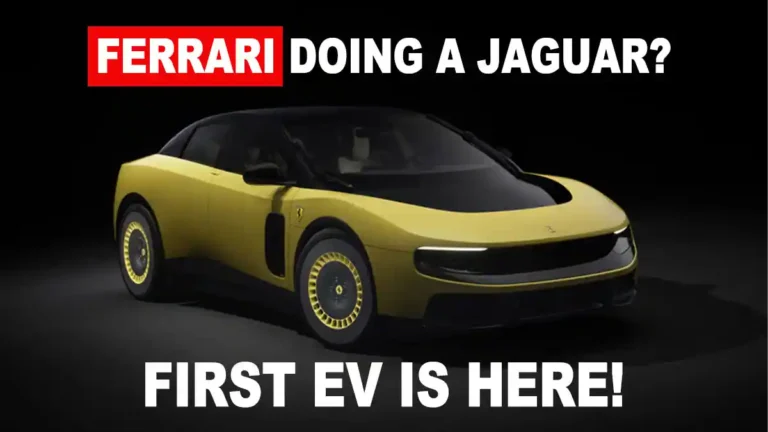
Ferrari has finally taken the plunge. The Italian marque has unveiled its first fully electric vehicle, called the Luce (which means ‘light‘ in Italian). This is a big shift for the brand that has built its identity around loud, high-revving petrol engines. But the reaction? It feels very familiar. If you followed Jaguar’s recent EV transition, you already know where this is going.
A Design Unlike Any Ferrari Before

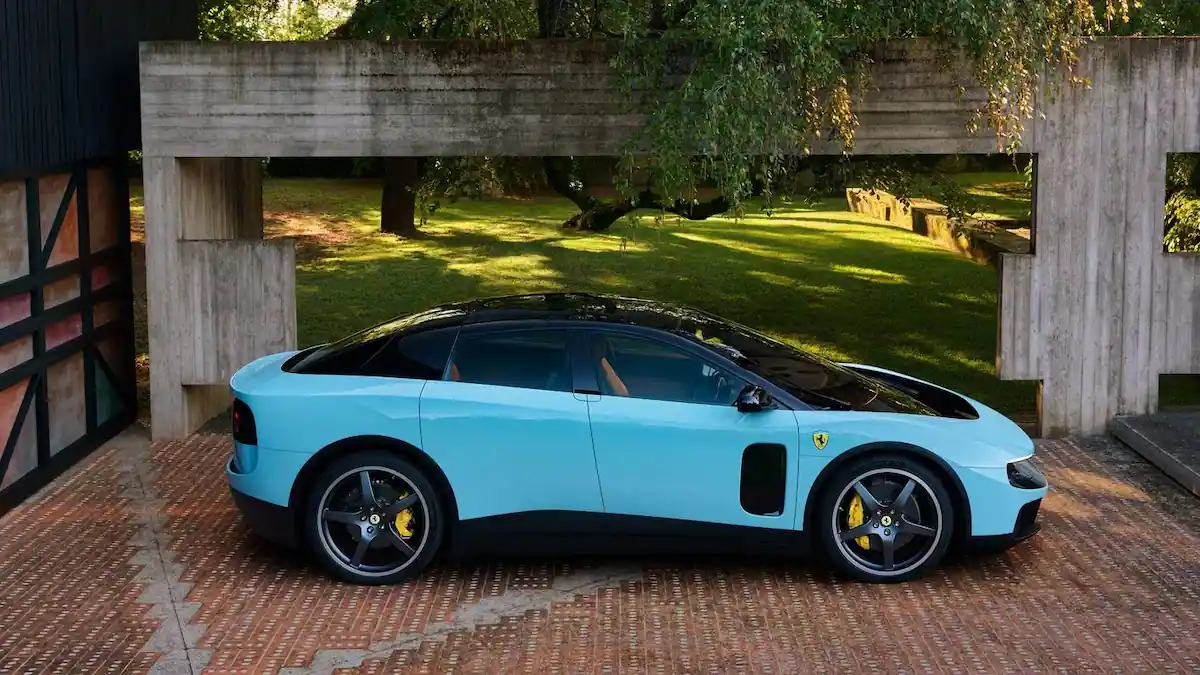
Table of Contents
The Ferrari Luce immediately stands out for its unusual proportions and styling. Ferrari collaborated with the design house LoveFrom, led by Jony Ive (Apple’s former design chief) and Marc Newson to create a completely fresh visual identity. This car breaks away from traditional Ferrari design direction. And that upsets many, and maybe enrages loyalists!
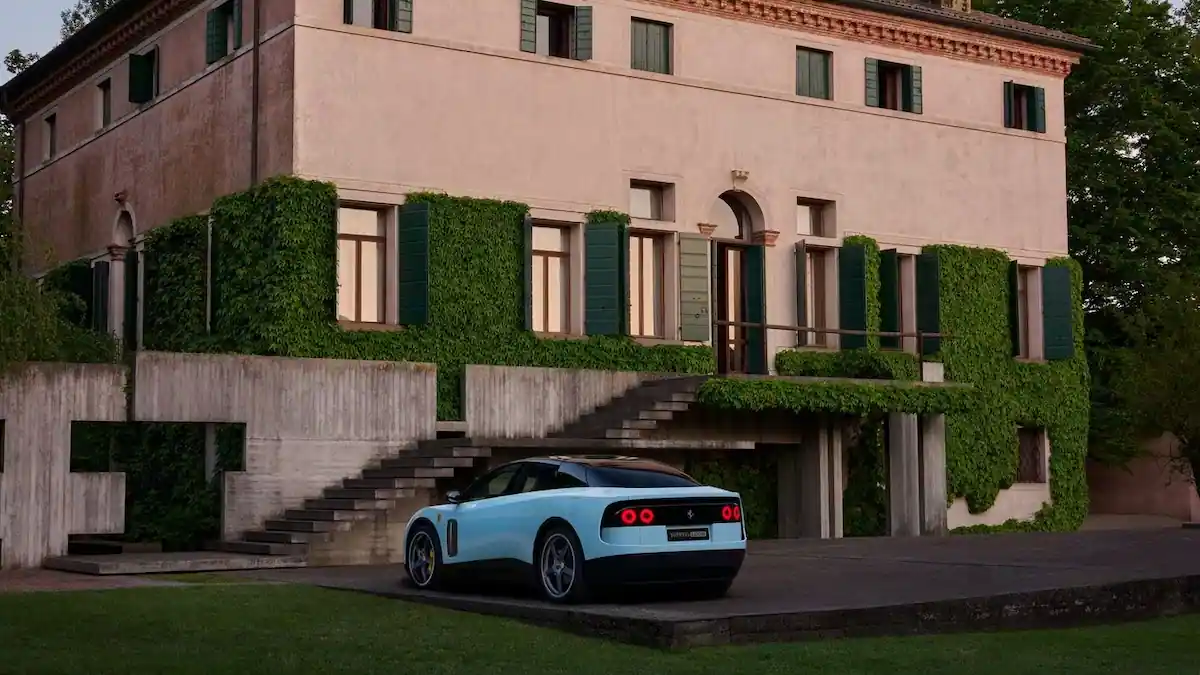
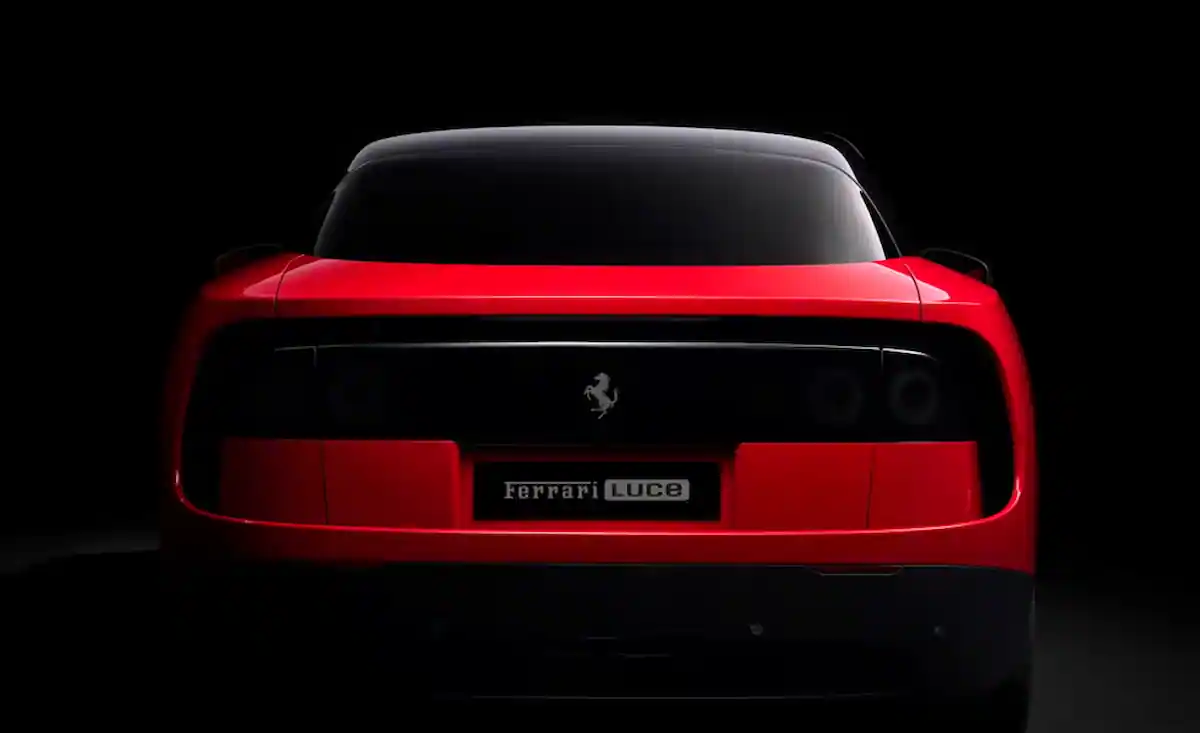
This electric supercar is longer than the Purosangue, measuring nearly 198 inches (5,026 mm), while also sitting lower. It is in fact, the longest Ferrari ever made. The cabin is pushed forward, giving it a cab-forward stance. Highlights include centre-opening doors, a rear lift-gate, and lighting that emerges from darkened panels. Even the windshield wipers park vertically along the A-pillars.
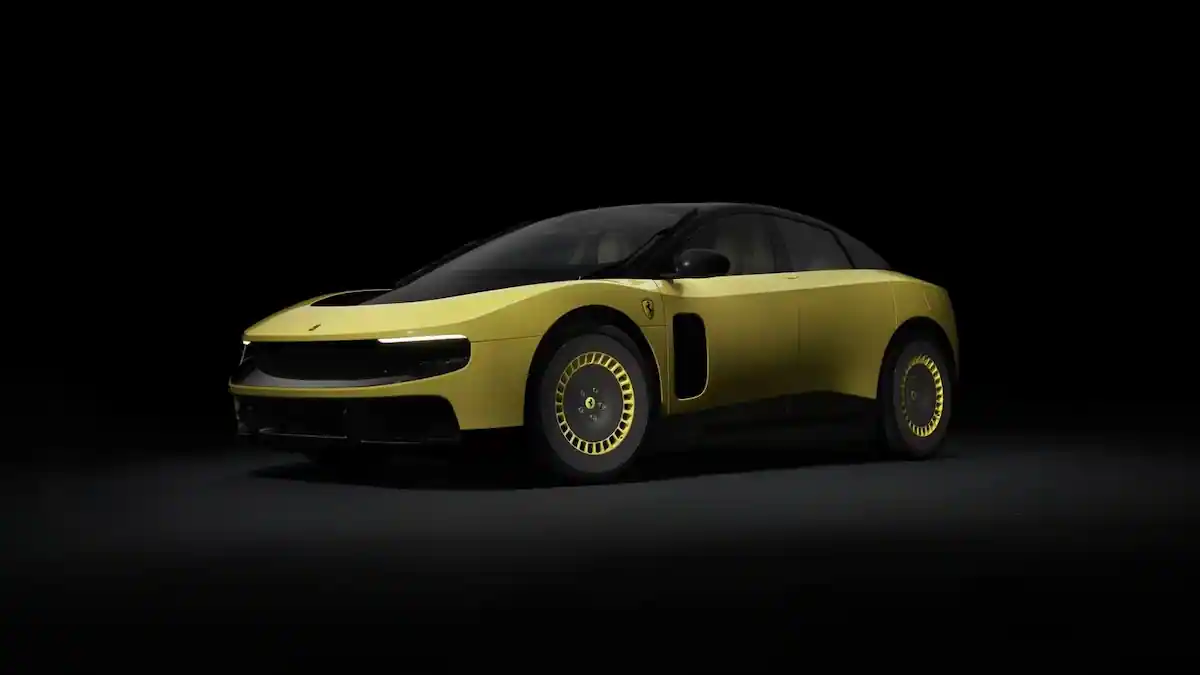
Aerodynamics have also been a key focus. Ferrari claims the Luce has the lowest drag coefficient of any road-going Ferrari, aided by features like tunnel-style spoilers and active grille shutters for heat exchangers.
Interior: Blending Digital And Physical
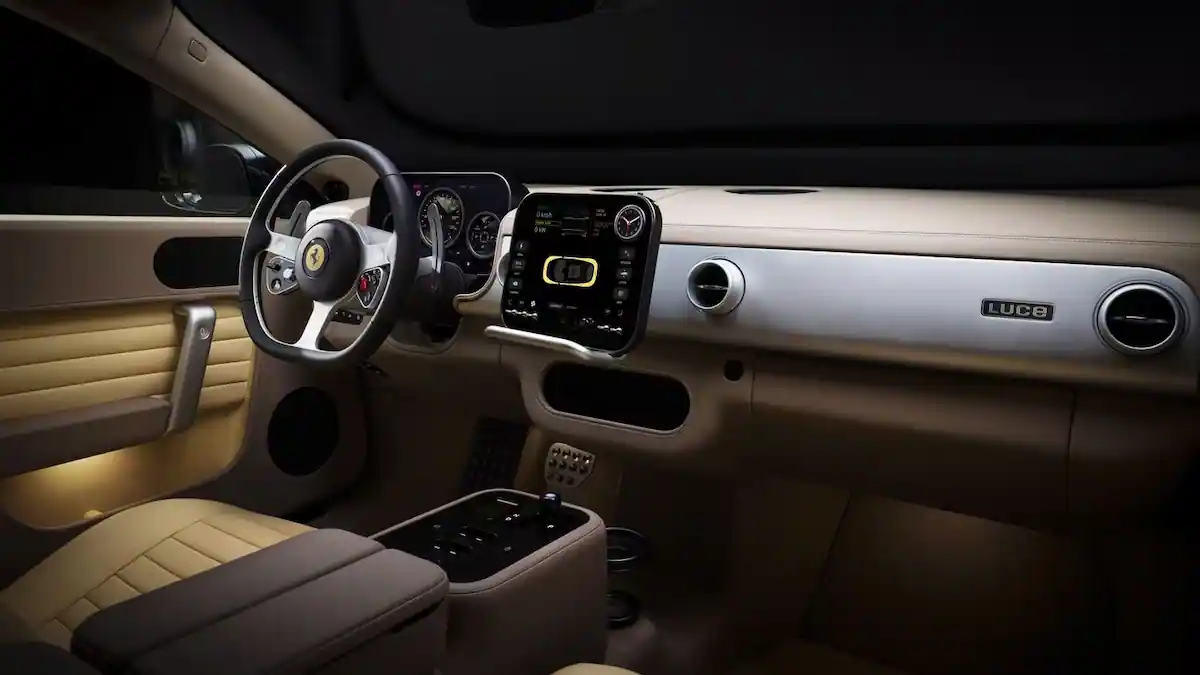
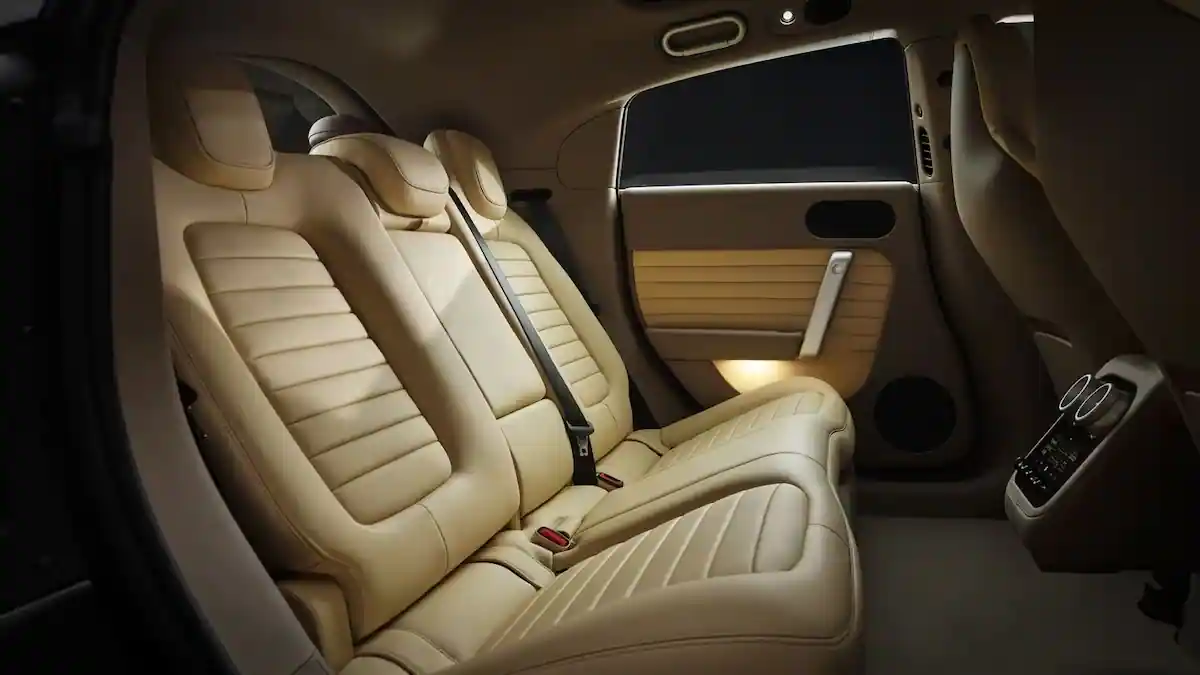
Inside, the Ferrari Luce continues its unconventional approach. Unlike typical Ferraris, this one seats five passengers, a first for the brand. The absence of a central tunnel allows for better space utilisation, and it also offers the largest boot ever seen in a Ferrari.
The cabin merges digital and physical controls thoughtfully. OLED displays dominate the dashboard, with a unique triple-dial setup that is fully digital. The centre dial shows speed and battery levels, while the others handle power and custom functions.
A central touchscreen with physical controls can pivot towards either the driver or passenger. Rear passengers also get their own display.
Ferrari has also replaced the touch-sensitive controls seen in the Purosangue with proper physical switches on the steering wheel. This includes dual manettino dials-one for drive modes and another specifically for EV powertrain settings.
Over 1,000 HP Electric Ferrari
At the heart of the Ferrari Luce are four electric motors- one for each wheel. The front motors produce 282 hp, while the rear ones generate a massive 831 hp. Combined output exceeds 1,000 hp, making it the most powerful road-going Ferrari ever. There’s a clear rear bias.
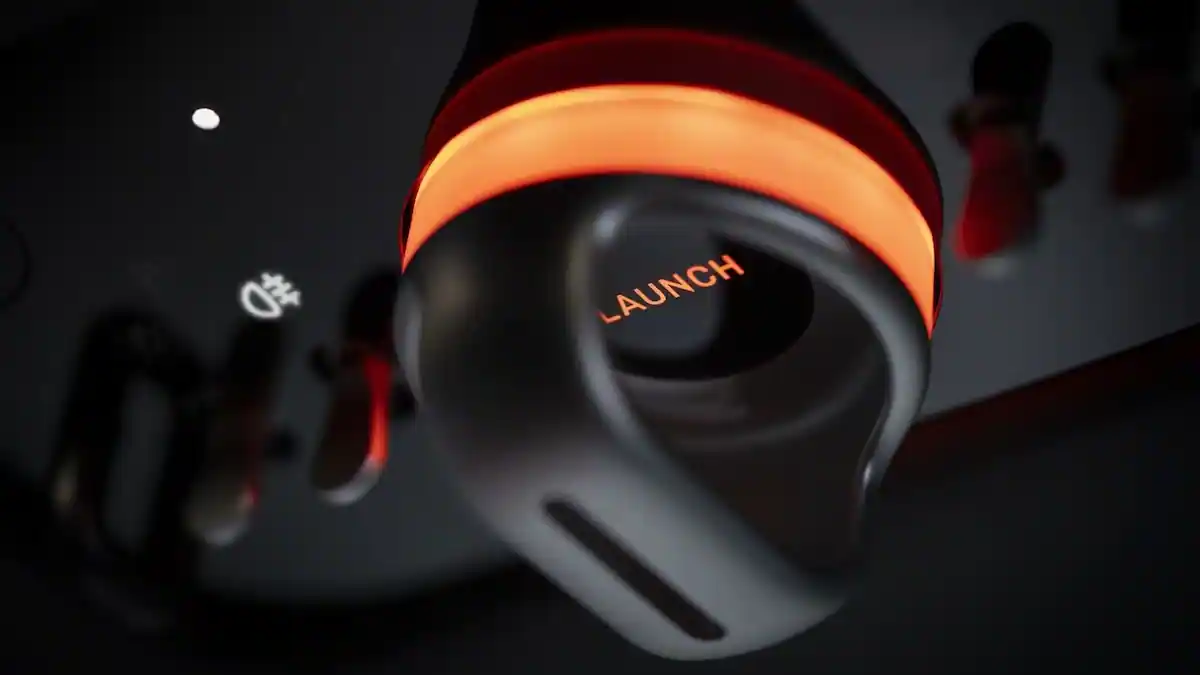
Despite weighing close to 5,000 pounds, performance figures are staggering. The Luce can sprint from 0 to 62 mph in just 2.5 seconds and reach 124 mph in 6.8 seconds. Top speed is rated at 193 mph. There is also a pull handle in the overhead console which activates a ‘launch mode’. It optimises traction control system and provides torque boost and unleashes 54 extra horses.
Ferrari has also introduced a unique driver engagement system. Steering-mounted paddles control regenerative braking and torque delivery, mimicking the feel of gear shifts in traditional performance cars. The left paddle adjusts regenerative braking levels, while the right one controls torque.
Sound: Recreating Emotion In An EV

One of the biggest challenges for Ferrari was recreating the emotional sound experience. Ferraris are known (and loved) for the roars of their V12 and twin-turbo V8 engines. The company has, however, taken a unique approach with the mechanical acoustics on the Luce. Instead of artificial engine noise, the Luce uses a patented system that captures real mechanical sounds from the rear axle and amplifies them. The intensity of this sound changes based on the selected driving mode, offering a more authentic experience compared to synthetic audio.
Battery, Range And Charging
The Ferrari Luce has a 122 kWh battery pack integrated into the chassis. It runs on an 800-volt architecture and supports ultra-fast charging at up to 350 kW. Ferrari claims a range of around 330 miles (WLTP), which would translate to roughly 280 miles under stricter testing cycles.
The Luce features four-wheel steering, torque vectoring across both axles, and an advanced active suspension system derived from models like the F80. Massive brake rotors and the largest wheels ever fitted to a Ferrari further enhance its dynamic capabilities.
Another interesting detail is that Ferrari has manufactured all powertrain components in-house. This is important, as the company will be able to support and repair the car in the future. Proper support is critical for safeguarding resale- something that Ferraris are known for.
Launch Timeline And Pricing
The Ferrari Luce will go on sale in Europe later this year with a price tag of around €550,000, roughly translating to $640,000. The U.S. launch is expected in the second quarter of 2027. Pricing for that market has not yet been announced.
Five Years In The Making
The Luce is not a rushed product. Ferrari CEO Benedetto Vigna has confirmed that it took around five years to develop. That explains the level of engineering that has gone into it, and to some extent, the ‘bold’ design.
Ferrari had previously ruled out a fully electric car. It had focused on hybrids instead, combining petrol engines with electric power. The Luce marks a clear change in strategy.
The Internet Reacts: An Obvious Backlash
As soon as the Luce was revealed, social media exploded. Some reactions were extremely harsh. Many criticised its design and packaging. The reactions, in general, were similar to those that Jaguar’s recent EV rebranding garnered. The British sports car brand faced similar criticism when it revealed its new electric concept, the production model of which is now christened ‘Type 01‘. Enthusiasts accused it of abandoning its heritage. Ferrari is now facing a similar pushback. For loyalists, the Luce marks an alarming departure or in some way, the end of what made Ferrari special.
Interestingly, there are some who likes the design. Ferrari’s design chief Flavio Manzoni is not surprised by the mixed response. He even admitted that the idea of an electric Ferrari with a completely new design is “polarising” and hopes that opinions will evolve over time.
Ferrari Isn’t Abandoning Petrol Yet

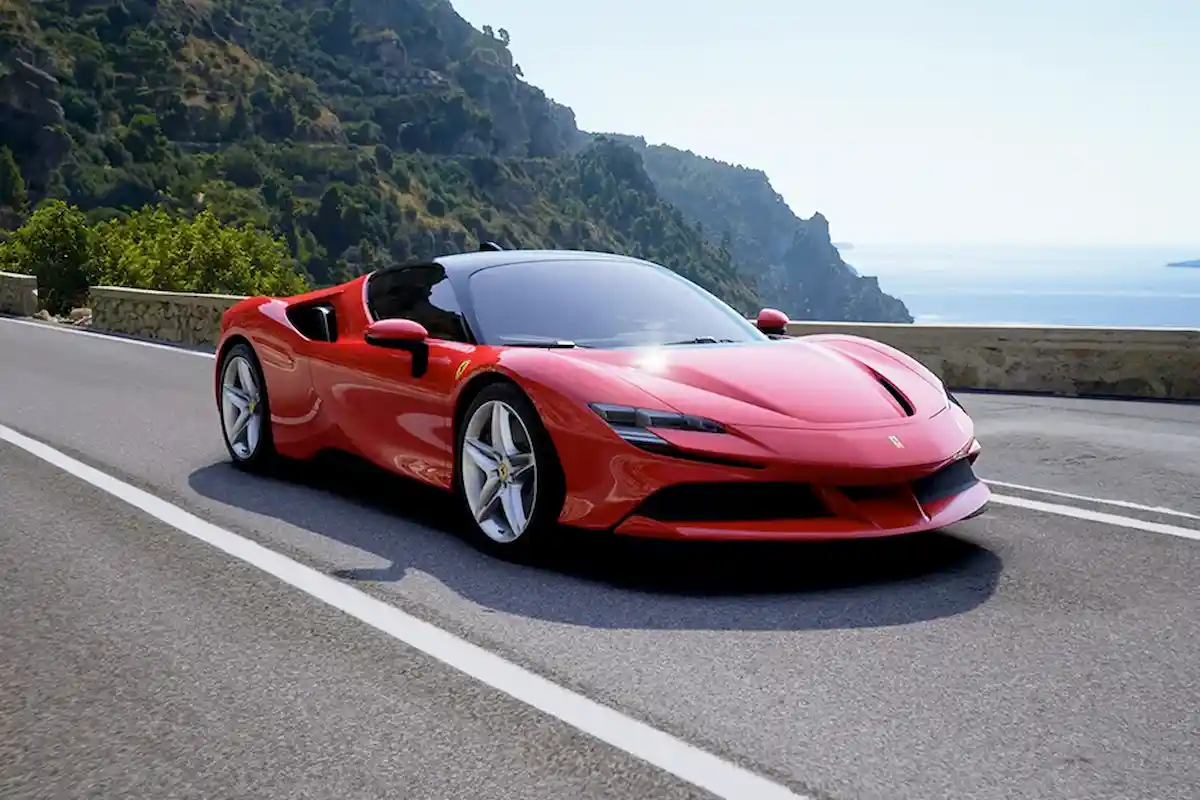
On the bright side, Ferrari is not going all-in on EVs. The company has made it clear that it will continue to offer petrol and hybrid cars alongside the Luce. This approach will allow the brand to explore electric mobility without losing its core audience completely- a fairly balanced approach.
Interestingly, Ferrari is launching its EV at a time when Lamborghini, one of its prime rivals has officially announced its intention to back away from making an EV. It is focussing on hybrids instead, and cites weak demand from core audience as the reason for the shift.
Porsche, another rival, is also scaling back its EV ambitions. The brand is dealing with slow demand, especially in China, along with challenges like tariffs in the US. Demand for electric vehicles has now grown as quickly as expected in many markets. In the US, recent policy changes have reduced incentives for EV buyers. Due to this, Ford and Volkswagen are now shifting their focuses to petrol models. Chinese manufacturers are putting conventional carmakers under great pressure, in the EV race.
Jaguar And Ferrari: Two Brands, Same Problem

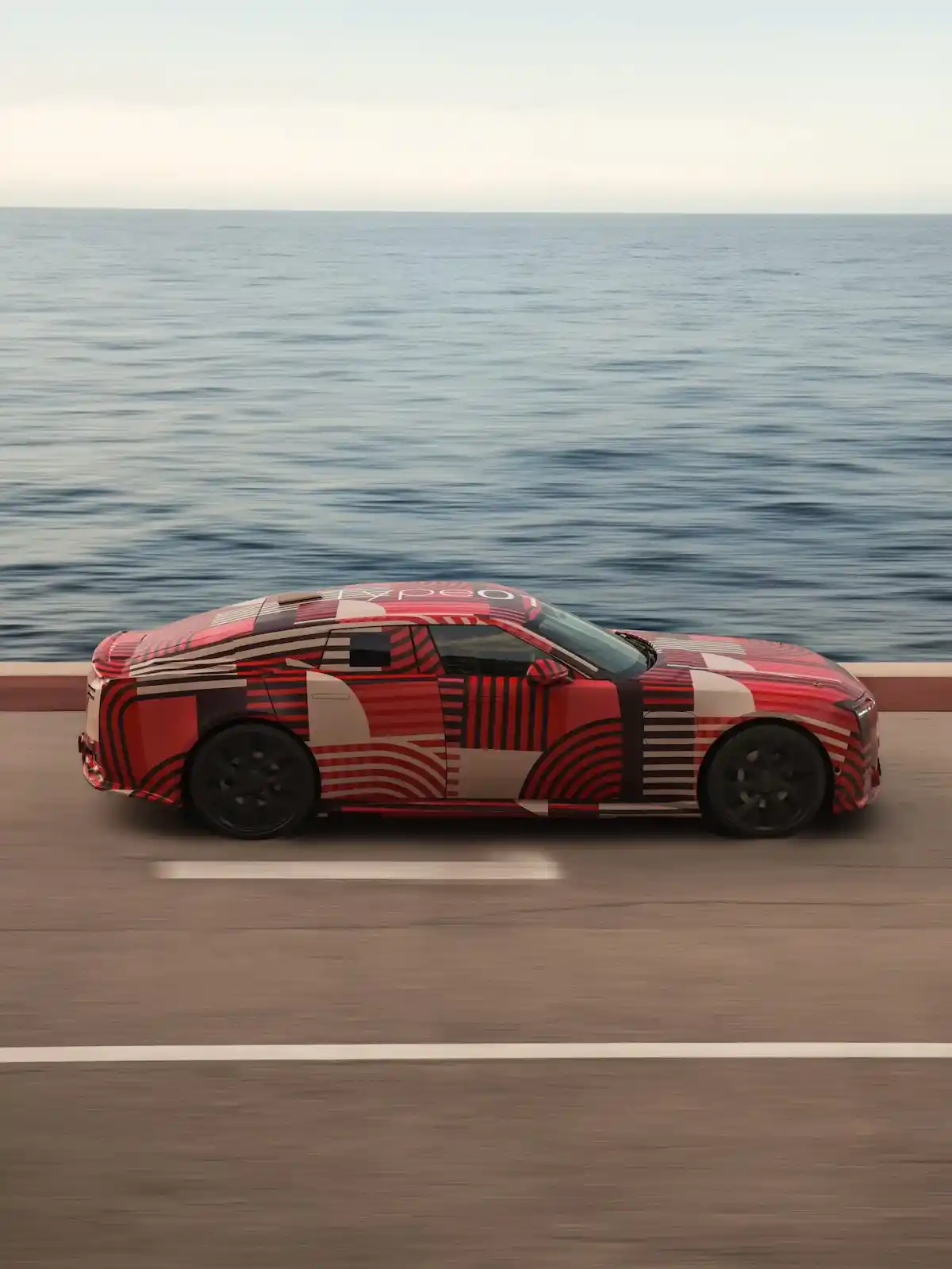
What we are seeing here is a pattern. Jaguar tried to reinvent itself with EVs and faced heavy criticism for moving away from its roots. Ferrari is now going through something very similar. Both these brands are built on emotion and customer sentiment. Engine sound, driving feel, and heritage matter a lot to their buyers. If a move takes any of these away, strong reactions will be triggered, particularly from loyalists. And brands like Ferrari and Jaguar thrive on loyalists! Upsetting them will upset the brand itself. Jaguar learned this the hard way. Ferrari is now having the same fate.. .

