



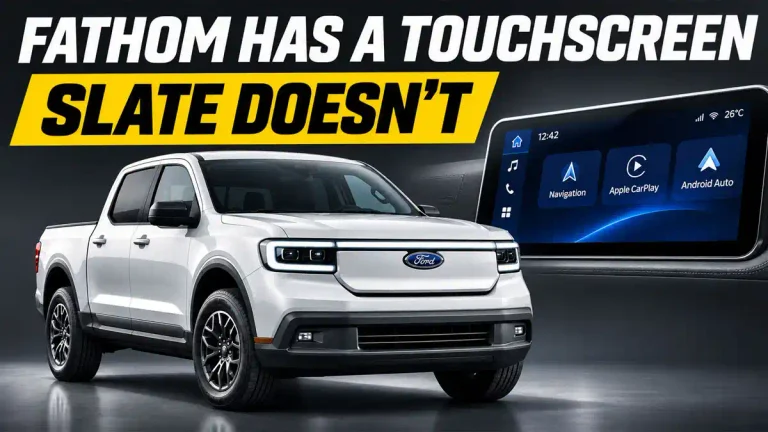
Ford and Slate are taking two very different approaches to building affordable electric pickups. While both companies are targeting budget-conscious buyers, their infotainment strategies couldn’t be further apart. The Ford Fathom will get a conventional touchscreen with Apple CarPlay and Android Auto, while the Slate truck expects owners to use their smartphones or tablets for navigation, music, and other infotainment features. It is a small difference on paper, but can have a big impact on everyday usability.
Slate Wants Your Phone To Replace The Infotainment System

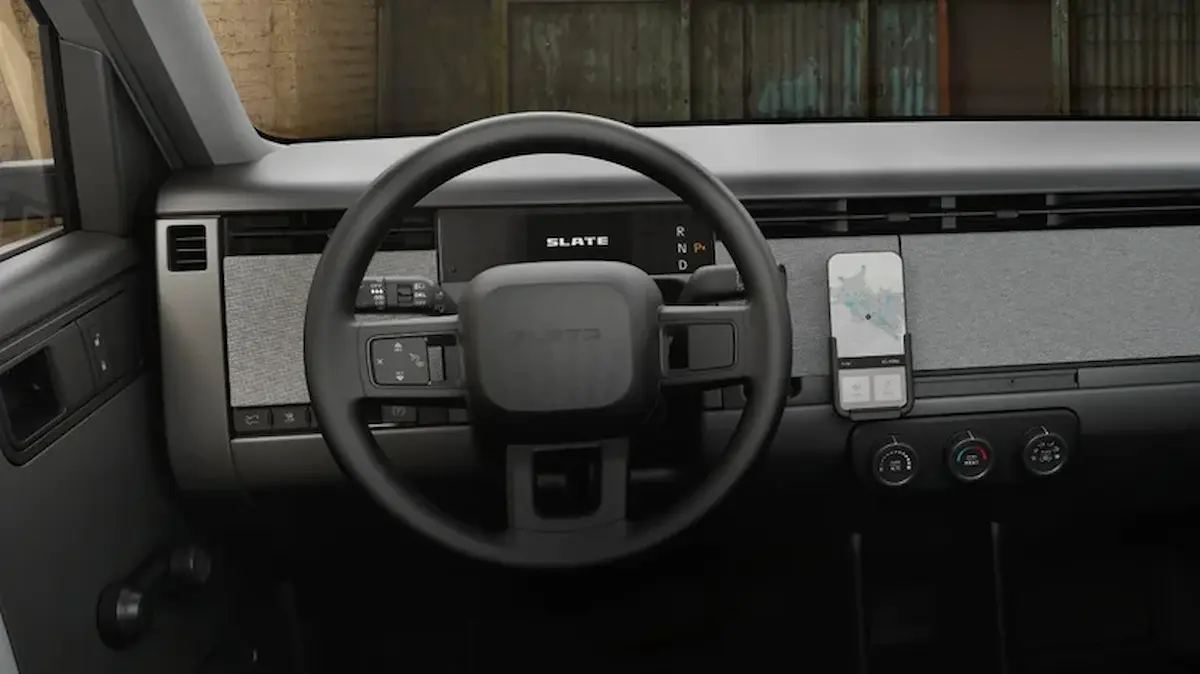
Slate isn’t simply offering its affordable pickup truck without Apple CarPlay or Android Auto. The company has designed the Blank Slate Truck around the idea that owners already carry their own connected devices.
ALSO READ: Ford CEO On Fathom Electric Pickup: ‘Completely Blew Me Away,’ Confirms 2027 Production
Instead of a built-in infotainment screen, it comes with a phone mount and charging arrangement. Buyers can also opt for accessory speakers and a mounting bracket designed for a larger tablet.
This means navigation, music, and other compatible apps will run directly on the owner’s device screen. There is no traditional central touchscreen to handle those functions.
Slate has also found a way to manage software updates without an embedded cellular connection. It reportedly told InsideEVs that updates can be downloaded to a smartphone and then transferred to the vehicle.
There is some logic behind this approach. Smartphones receive regular hardware and software upgrades, so owners won’t have to worry about an ageing infotainment system becoming outdated over time.
However, there are obvious compromises. A smartphone screen is much smaller than a conventional touchscreen display, and using it for navigation or other functions may not be as convenient.
ALSO READ: Ford Fathom Could Kill The Slate Electric Pickup!
Some prospective buyers are already discussing aftermarket solutions, including traditional stereos, Raspberry Pi projects, and other ways to add CarPlay or Android Auto support.
Ford Fathom Takes A More Conventional Approach- A Central Touchscreen!

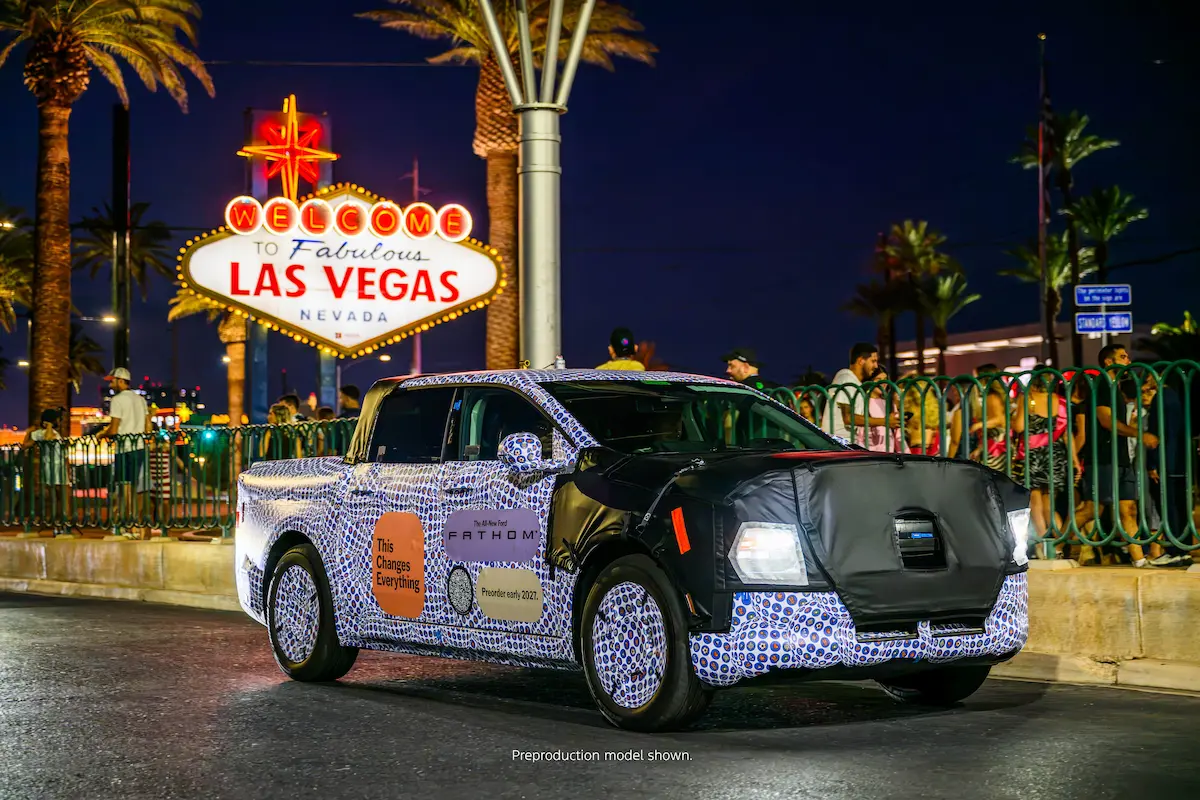
Ford is going in the opposite direction. The Fathom will feature a built-in touchscreen with Apple CarPlay and Android Auto support.
This should make the truck more familiar to buyers who are already used to modern infotainment units. Instead of mounting a phone and relying on its screen, owners can access compatible apps through the central display.
The Fathom will also feature a digital key, bidirectional power capability, and the hardware required for Ford’s next-generation BlueCruise hands-free driving system.
Ford has not yet announced the truck’s estimated driving range, towing capacity, or payload figures yet. Pre-orders are expected to begin in early 2027.
The difference is also reflected in their body styles and intended use. The Slate is a two-door electric pickup with a simpler approach, while the five-seat Fathom is shaping up to be a more conventional daily driver.
Both Electric Pickups Start Below $30,000
The two companies are targeting the same price range, although Slate has a lower advertised starting price. The Blank Slate Truck starts at $24,950, with another $1,450 for destination charges. The Ford Fathom starts at $28,350, plus $1,595 for destination and delivery. That brings the Slate to $26,400 and the Ford to $29,945 before taxes and other fees.
The price difference is understandable when you consider how the two companies are approaching vehicle development.
Slate is starting from scratch and questioning the need for almost every conventional feature. Its strategy is to keep the vehicle simple and affordable by leaving out equipment that some buyers may not need. Ford, on the other hand, is trying to reduce manufacturing costs without removing familiar features.
Ford Is Cutting Manufacturing Costs, Not Just Features
Ford is investing $2 billion to retool its Louisville Assembly Plant around its new Universal EV (UEV) Production System.

The company says the platform uses 20% fewer parts than a typical vehicle, along with 50% fewer cooling hoses and connections. Its wiring harness is also more than 4,000 feet shorter than the one used in the first-generation Mustang Mach-E.
Ford expects the new assembly process to be 15% faster than the plant’s previous production methods. These changes are designed to simplify manufacturing and reduce costs while allowing Ford to retain features buyers expect from a modern vehicle.
This is a different approach from Slate’s strategy. Rather than asking customers to bring their own infotainment hardware, Ford is using engineering and production changes to make a more conventional electric pickup affordable. Ford’s ambitions are big with the Fathom. It is reportedly targeting 100,000 units sales in the first year.
Does Smartphone Connectivity Really Matter?
For many buyers, Apple CarPlay and Android Auto are more than just convenience features. They have become an important part of their everyday driving experience.
Deloitte’s 2025 Global Automotive Consumer Study surveyed more than 31,000 consumers across 30 countries. It found that 63% of US respondents considered smartphone connectivity through CarPlay or Android Auto somewhat or very important when choosing their next vehicle.
That suggests Slate’s decision to leave out a traditional infotainment system could divide potential buyers. Some may appreciate the simpler cabin, lower price, and freedom to use their own devices. Others may find it difficult to give up the convenience of a dedicated touchscreen, especially if they regularly use navigation and music apps while driving.