



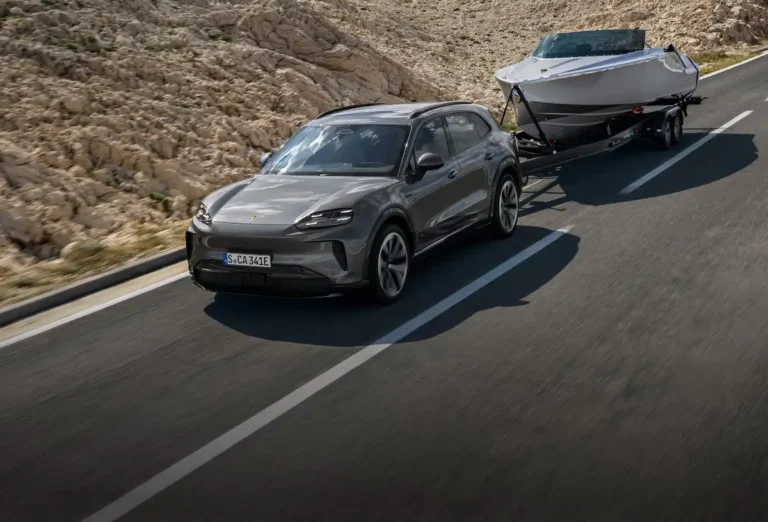
Porsche Cayenne Electric has entered production as the most powerful road-going Porsche ever built, delivering up to 1,140 hp. Despite that headline figure, it still manages a claimed range of 373 miles- an impressive balance of performance and efficiency. Achieving this required a complete rethink of battery design, charging capability, and most importantly, thermal management.
In-House Developed Battery Pack

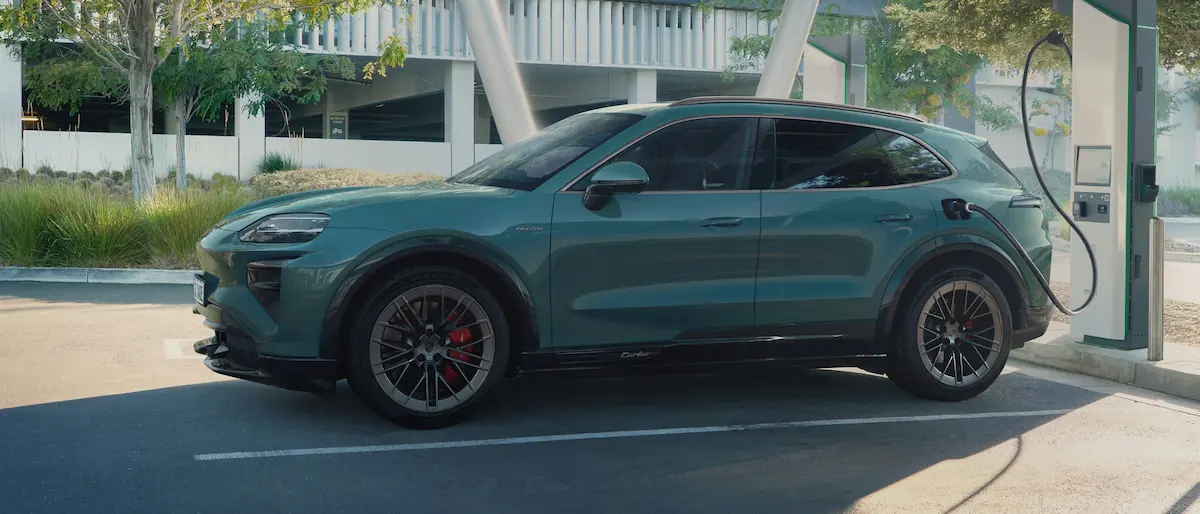
At the core of the Cayenne Electric is a 113 kWh battery pack developed entirely in-house. Production takes place at Porsche’s Smart Battery Shop in Horná Streda, Slovakia. It was developed in collaboration with Porsche Werkzeugbau GmbH.
The battery uses 192 large-format pouch cells. These have graphite-silicon anodes and nickel-manganese-cobalt-aluminium (NMCA) cathodes. A high nickel content of 86 percent improves energy density, delivering around 7 percent more efficiency compared to the battery used in the Porsche Taycan. The addition of silicon in the anodes also plays a key role in enabling faster charging.
800V Charging And Real-World Speed

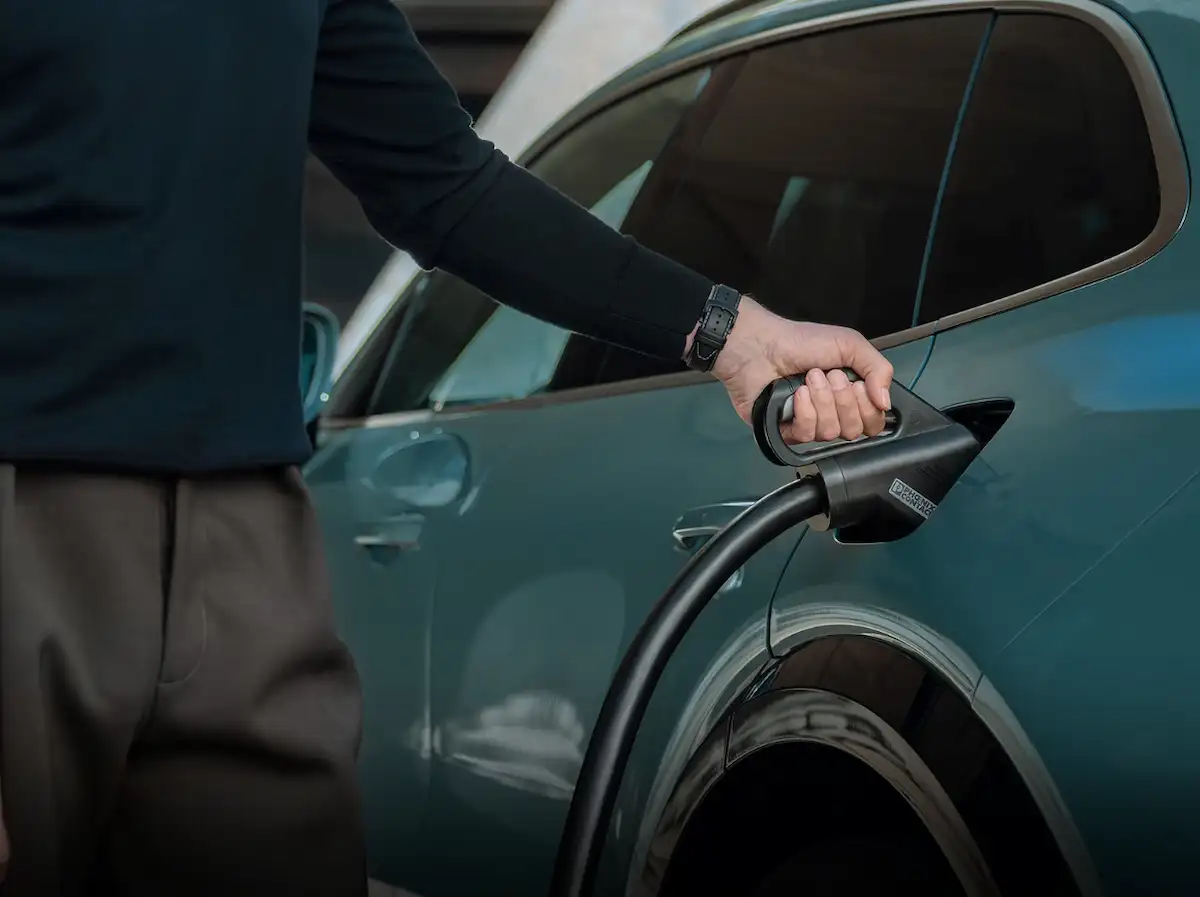
The Cayenne Electric runs on an 800-volt architecture, allowing ultra-fast charging at up to 400 kW. Under ideal conditions, it can charge from 10 to 80 percent in under 16 minutes.
More importantly, it sustains high charging speeds. The system can hold between 350 kW and 400 kW up to a 50 percent state of charge (SoC) at moderate temperatures, improving usability in real-world conditions. Even on older 400-volt chargers, this system remains efficient, supporting charging speeds of up to 200 kW.
Advanced Thermal Management: 100 Fridges’ Worth Of Cooling

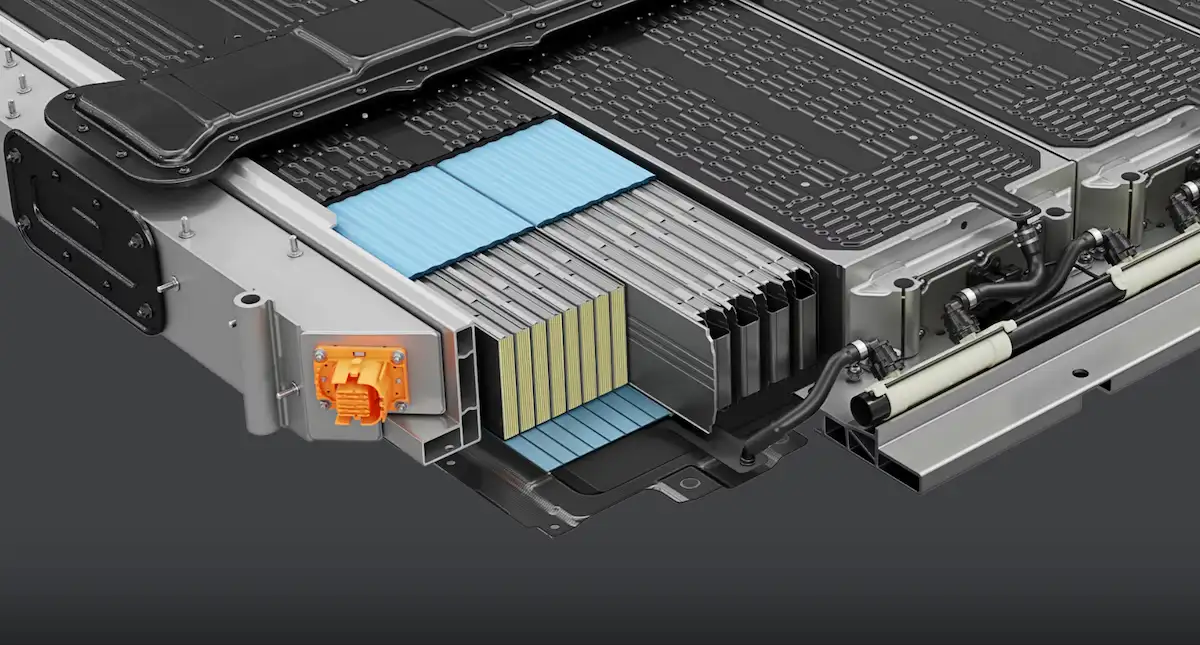
Thermal management is central to both performance and battery life. Porsche uses a double-sided cooling system that regulates temperature from above and below the battery pack. This “coolant sandwich” design ensures consistent performance regardless of external conditions or driving style.
The system’s cooling capacity is comparable to that of around 100 household refrigerators. At the same time, energy-efficient fans reduce power consumption by roughly 15 percent compared to conventional setups.
A predictive thermal management system ties everything together. It continuously monitors route data, driving behavior, and temperature conditions to optimize cooling and heating in real time.
ALSO READ: Gas-Powered Next Generation Porsche Macan Spied Testing With Audi Q5 Bodyshell- First Images
Structural Integration For Efficiency
The battery pack is integrated directly into the vehicle’s structure, rather than being a separate unit. This reduces weight and improves packaging efficiency. As a result, the ratio of active cell material to overall battery size has improved by 12 percent compared to previous designs. The battery is now lighter, more compact, and more efficient- all without sacrificing capacity.
This integration also increases chassis rigidity and lowers the center of gravity, both of which improve handling. Safety remains a priority, with reinforced Aluminum structures designed to absorb impact energy and protect the cells.

