



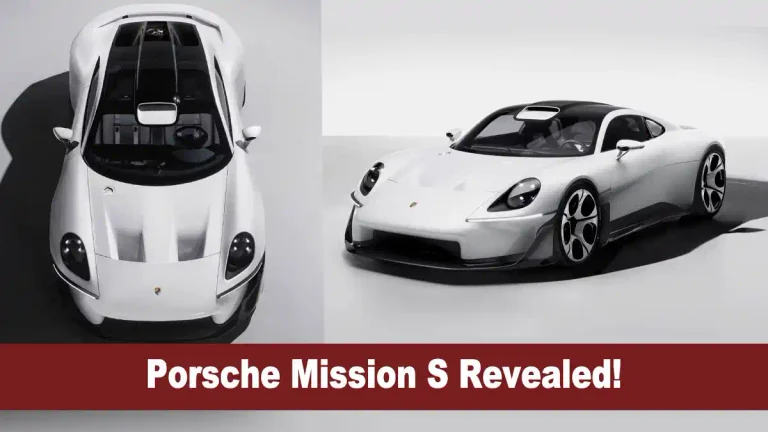
Porsche has unveiled the Mission S, a concept that previews a new mid-engined supercar that will sit above the 911 when launched. Developed under the company’s Sportwagenschmiede ’35 strategy, it aims at expanding the sports car lineup further, with a permanent model rather than a limited-run special edition. Porsche CEO Michael Leiters has confirmed the broader ambition, although technical specifications and a production timeline remain under wraps.
Table of Contents
Porsche Mission S: A New Design Direction

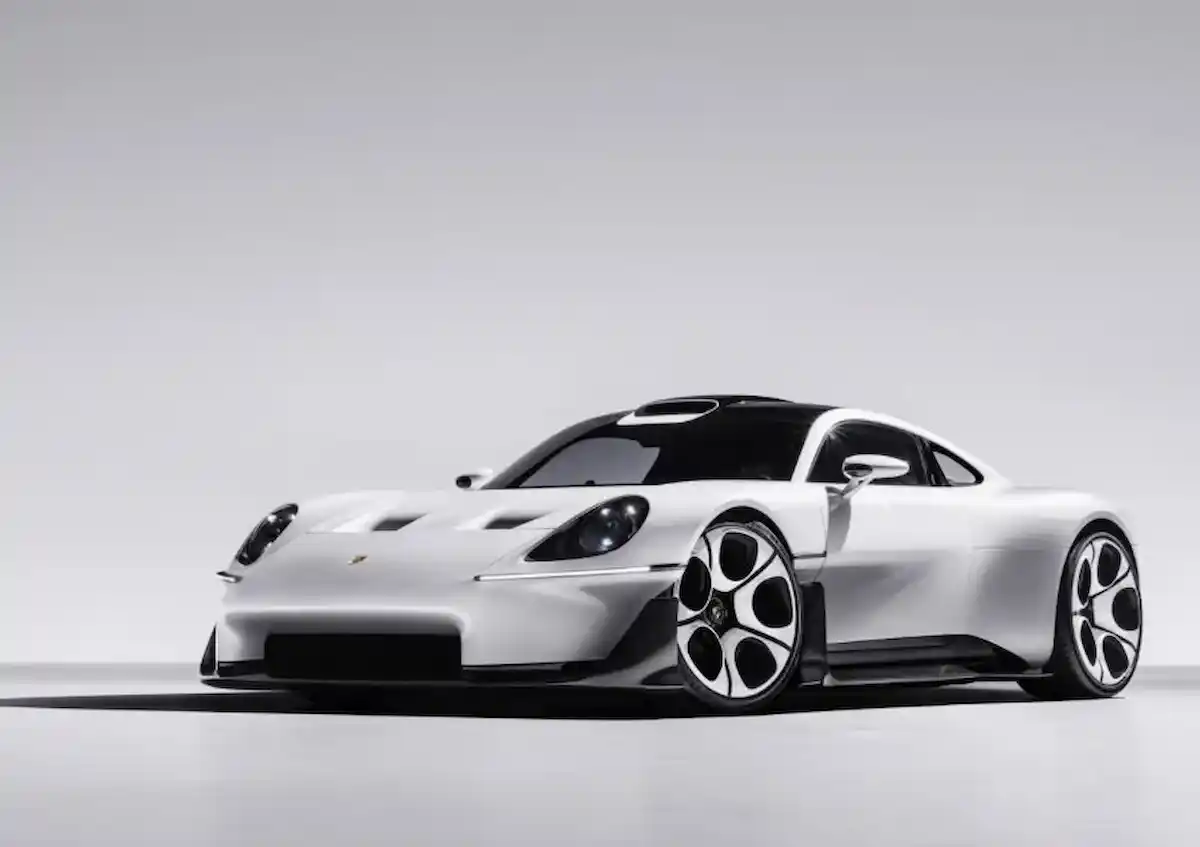
The Mission S debuted on a pier in Queens, New York, the same location where Porsche photographed the iconic 550 Spyder in 1953. That car helped establish Porsche’s reputation as a serious sports car manufacturer, making the setting a deliberate link between the brand’s history and its future.
The concept gives familiar Porsche design cues a fresh interpretation. Rounded headlights, muscular fenders, a low front end and a distinctive roofline preserve the brand’s identity. The concept has sharper proportions and cleaner surfaces.
Its design draws inspiration from several important models, including the 911, 959 and GT1. The rear carries a strong GT1 influence. It has a mid-engined layout, rather than a rear-engine mounting.

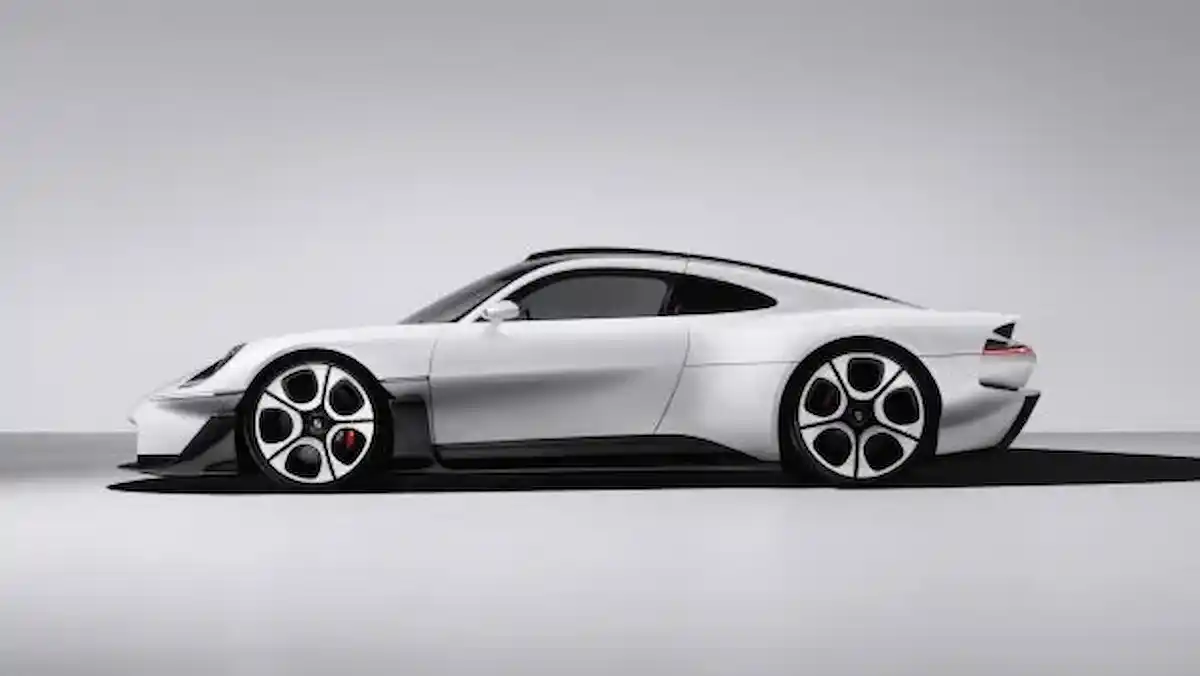
Other details include an active rear wing, cooling elements inspired by the Porsche 917 (an exposed fan wheel to be precise!) and lightweight wheels, the design of which recalls the classic 928. Porsche describes its approach as authentic, consistent and timeless, with the Mission S intended to influence the look of future sports cars.
A Driver-Focused Interior- Ditches Large Screens!

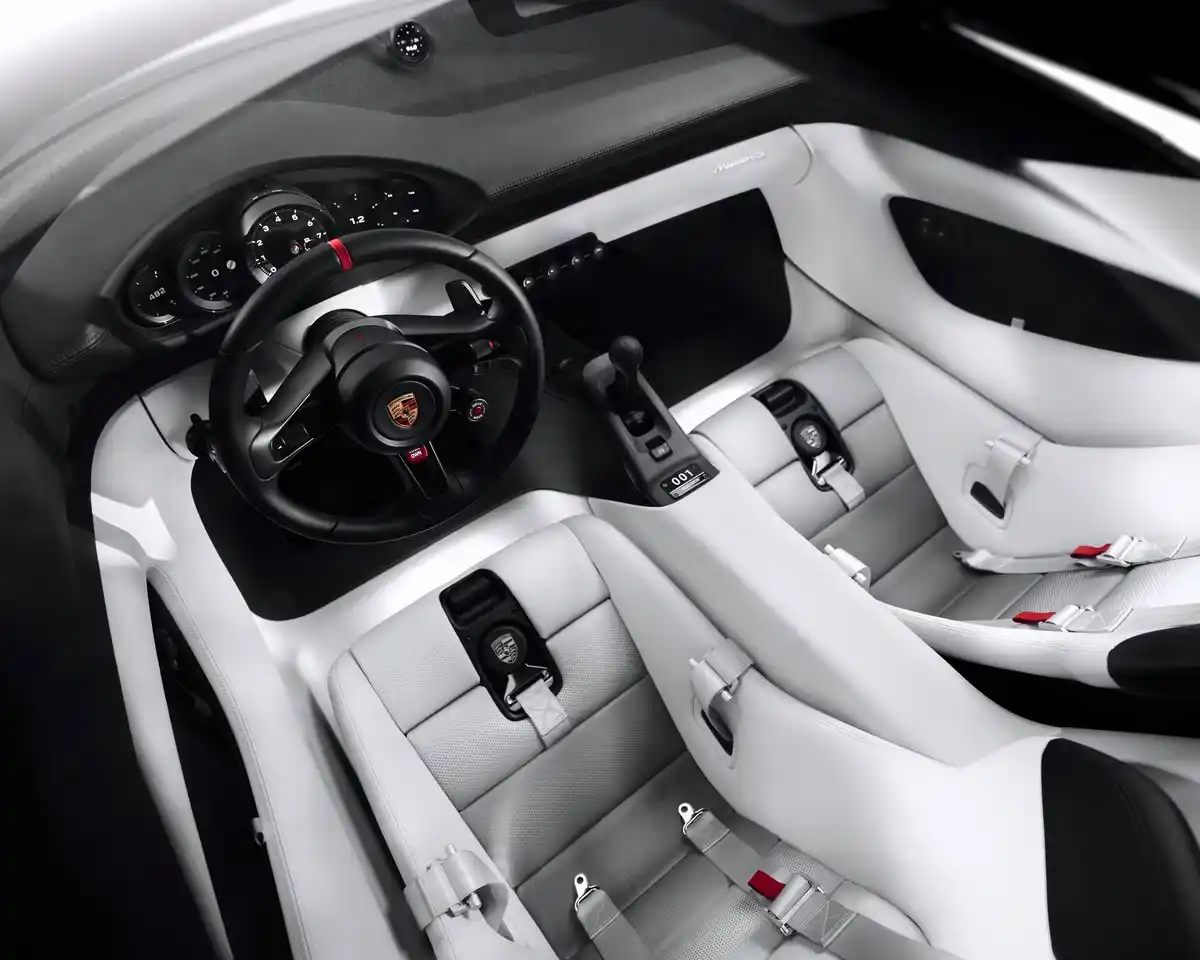
The Mission S carries its traditional design approach into the cabin, as well. The dashboard and door panels feature flowing lines inspired by the 550 Spyder and 356, while a white, gray and red color scheme references Porsche’s motorsport heritage.
Instead of filling the interior with large screens, Porsche has combined physical buttons with digital displays. Five circular gauges sit behind the steering wheel, with a traditional tachometer taking center stage. The instrument layout changes according to the selected driving mode. The Sport Chrono package blends classic Porsche styling with modern technology.

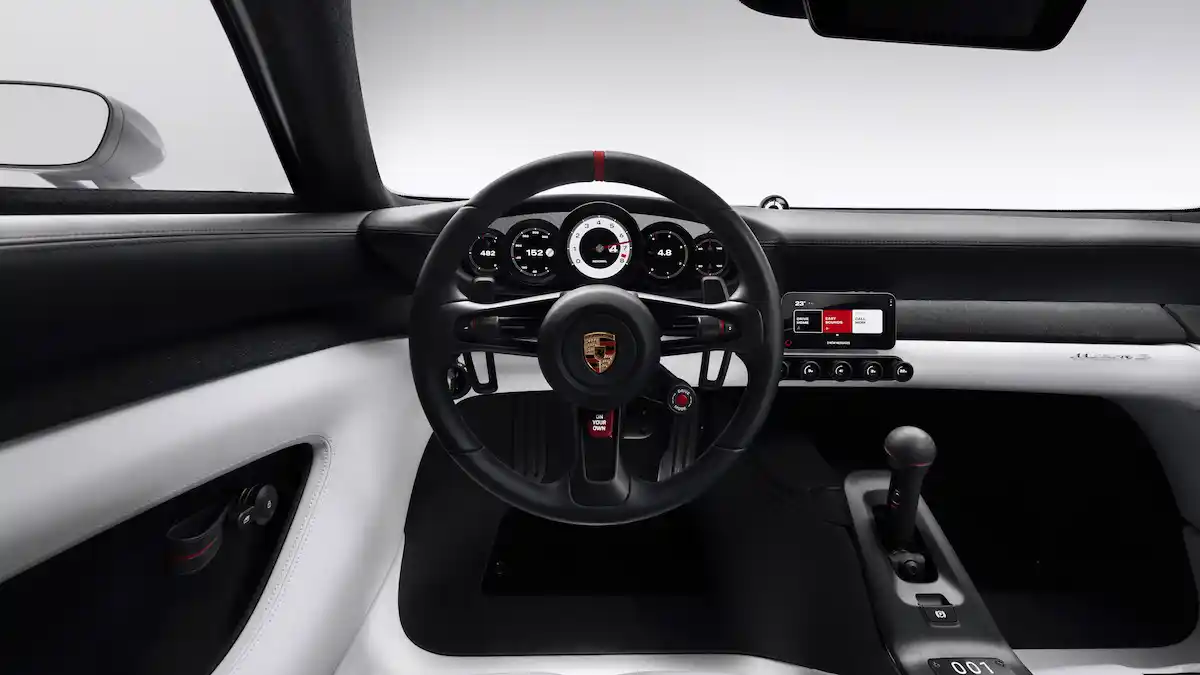
The concept also takes an unusual approach to smartphone integration. Rather than using a permanent central touchscreen or a dedicated passenger display, it features a retractable MagSafe smartphone holder. Drivers can mount their phones for navigation and other information when needed, keeping the dashboard uncluttered during other times.
The layout suggests Porsche wants future sports cars to retain a direct, driver-focused experience even as digital technology becomes more important.
A New Supercar Above The 911
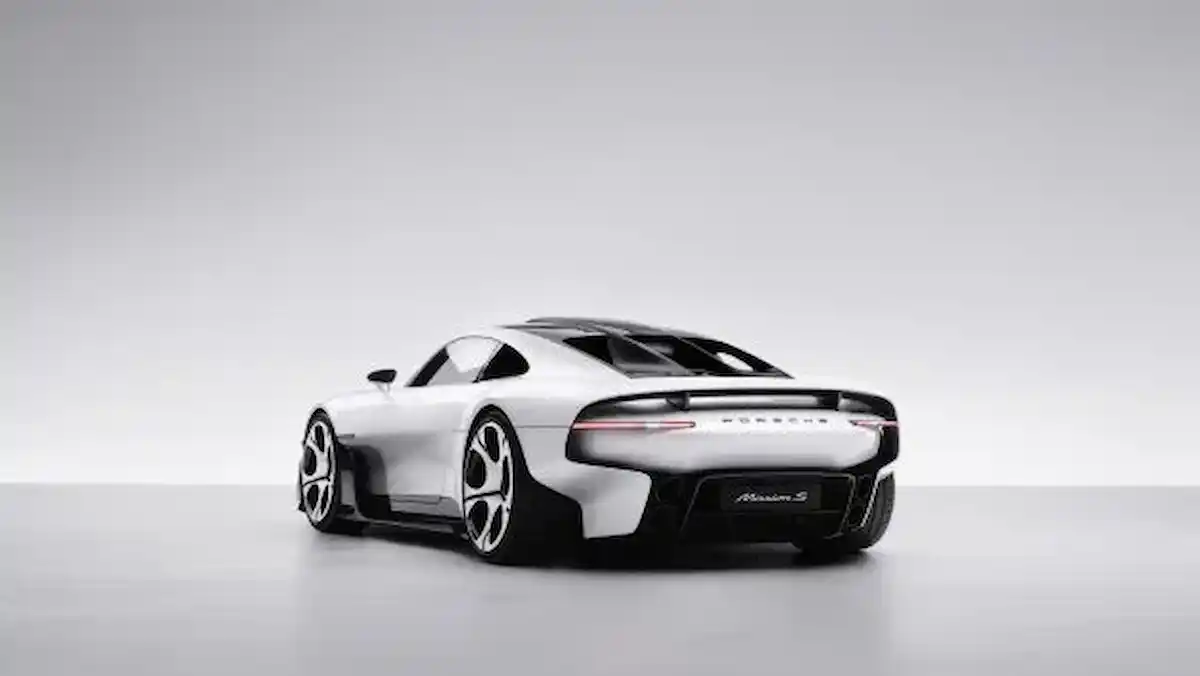
The Mission S’s mid-engined configuration sets it apart from the rear-engined 911. Placing the engine behind the cabin and ahead of the rear axle allows Porsche to pursue the proportions and packaging associated with dedicated mid-engined supercars.
Under the Sportwagenschmiede ’35 strategy, the Mission S previews a model intended to become a lasting part of Porsche’s lineup. It is not just a design study for a one-off hypercar.
However, Porsche has not confirmed the production car’s engine, power output, performance figures, possible price or launch timeline yet.

