



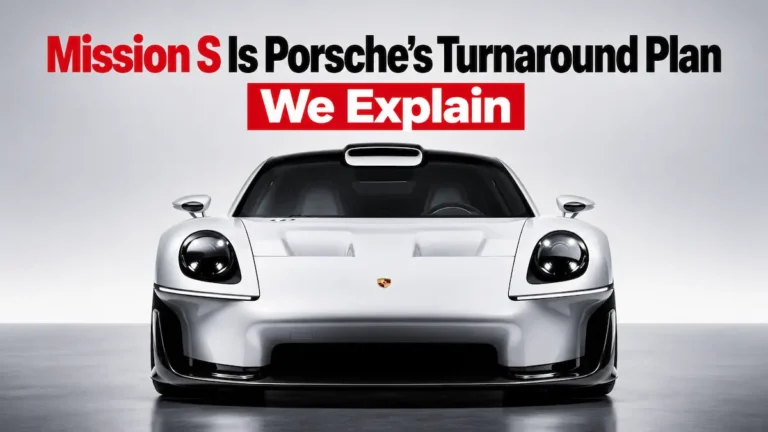
Porsche unveiled its Mission S supercar concept just eight days after announcing a major turnaround plan (Porsche Sportwagenschmiede 35), a timing that might seem contradictory for a company under financial pressure. It isn’t. Porsche wants to improve profitability by selling fewer vehicles at higher prices, and the Mission S offers the clearest indication yet of how that strategy could work. Designed to sit permanently above the 911, it previews a new mid-engined sports car that could reportedly cost around €500,000. The price and production plans remain unconfirmed, but the strategic intent is clear.
Table of Contents
Mission S Is More Than A Halo Car

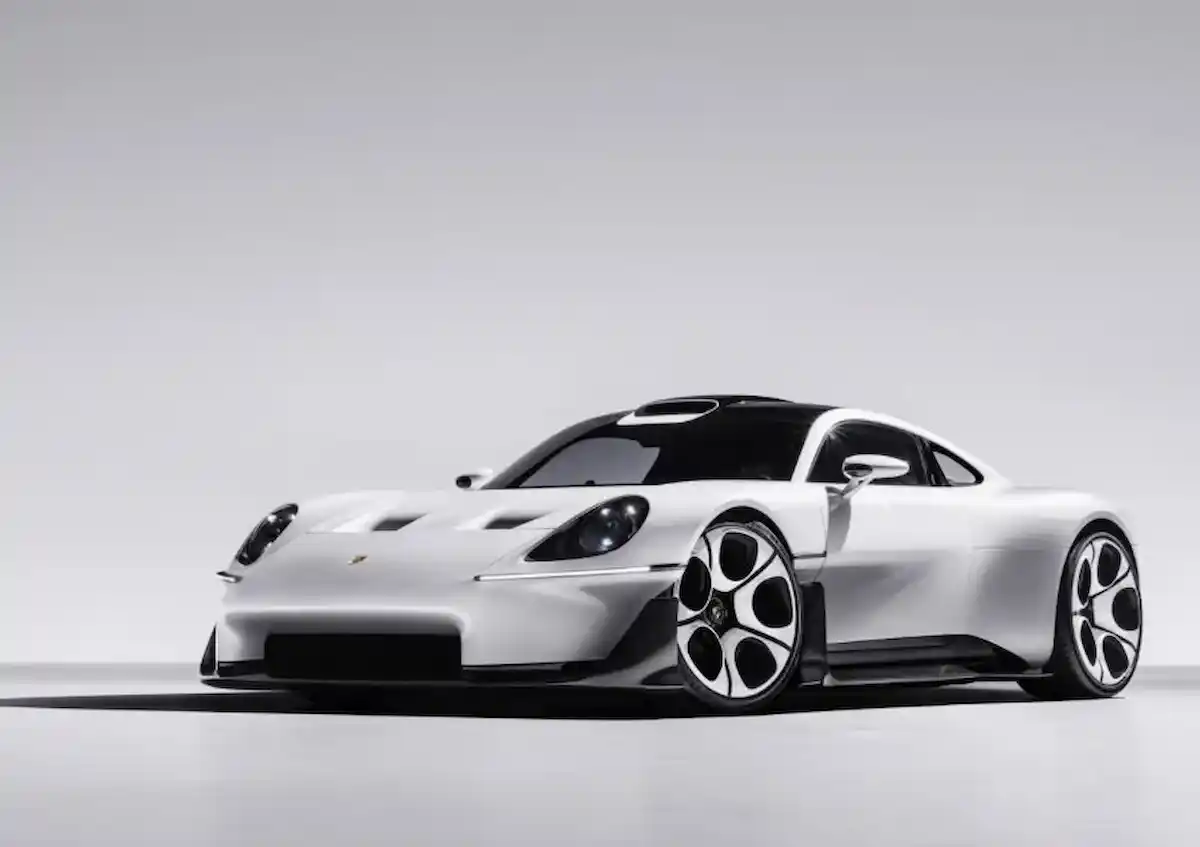
Unveiled in Queens, New York, on October 15, the Mission S is still a vision car. It previews a new styling direction for Porsche sports cars. More importantly, it previews an all-new mid-engined super sports car platform.
The crucial detail is that Porsche does not describe the project as a limited-run hypercar. Chairman Michael Leiters said the platform is intended to become a permanent and versatile addition to the company’s lineup, positioned above the 911.
Porsche has built more expensive, more exclusive sports cars before. The Carrera GT and 918 Spyder established the brand’s credentials at the top end of the market, but both were limited-run models. A permanent model line above the 911 would thus be a first.
That distinction makes the Mission S particularly relevant to Porsche’s turnaround. Rather than relying on a handful of special editions, the company appears to be exploring a lasting place in a higher-priced segment.
Porsche’s Turnaround Plan Is About Profit, Not Volume

Porsche’s business has faced mounting pressure. The company abandoned its target of making 80% of its sales electric by 2030 after electrified models accounted for 22.2% of shipments. It has extended plans for combustion-engine and plug-in hybrid versions of the Cayenne and Panamera well into the 2030s.
Porsche has also completed the sale of its stakes in Bugatti Rimac and Rimac Group for close to €1 billion, including €250 million directed toward pension obligations. Meanwhile, US deliveries fell 12.9% in the third quarter.
These developments help explain why Porsche announced a major turnaround plan on October 7. The strategy calls for higher-end products and lower sales numbers as the company seeks to improve profitability.
That changes how the Mission S should be viewed. A supercar priced far above the 911 might appear out of step with a company facing financial challenges. But if Porsche wants to sell fewer cars while generating more profit from each one, an exclusive, high-priced model fits the plan.

The question is whether Porsche can make that approach work at scale. Ferrari has built a successful business around exclusivity and high prices. Porsche, by contrast, has traditionally relied on higher-volume SUVs such as the Cayenne and Macan to support its business.
Moving toward scarcity would therefore represent a major change in ita business model, not simply an expansion of its product range.
A Design That Connects Porsche’s Past And Future
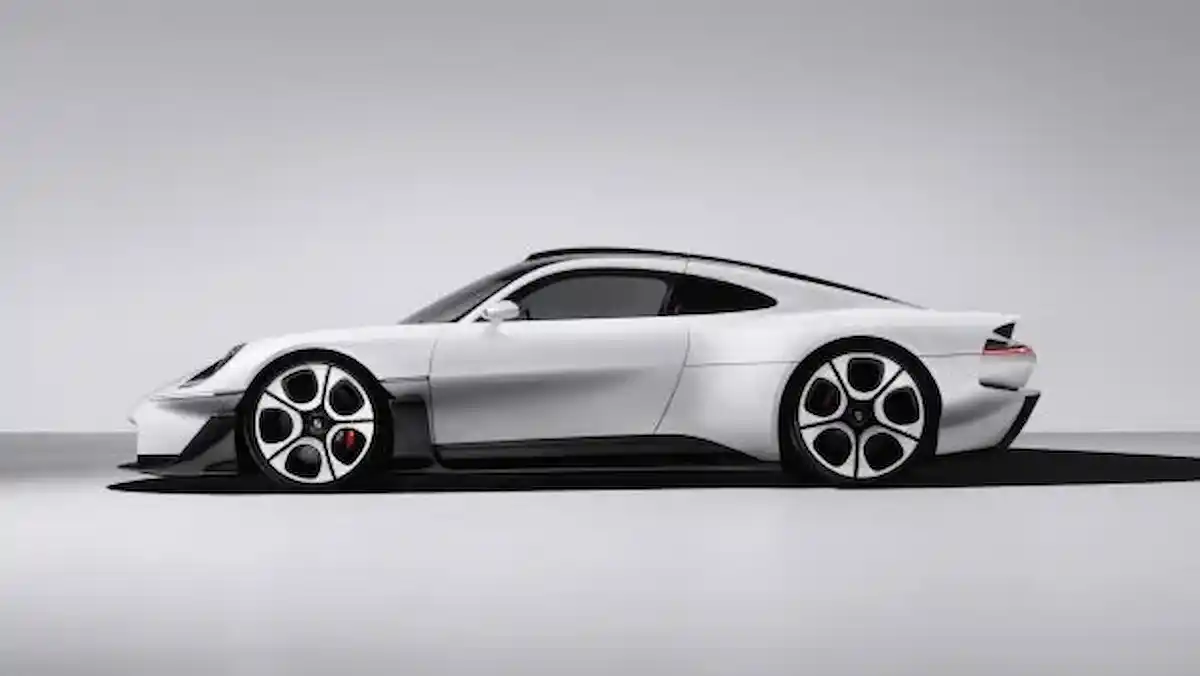
The Mission S, designed under Porsche Head of Style Tobias Sühlmann, combines familiar elements from the company’s history with a new mid-engined layout.
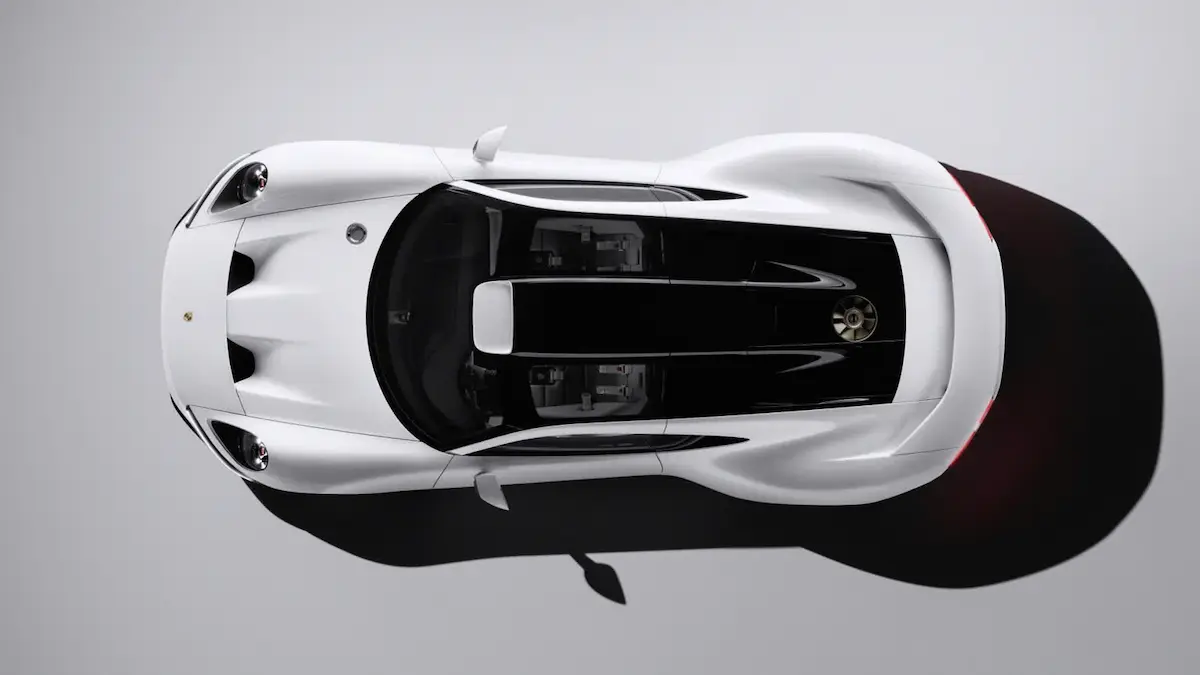
Its rounded headlights and fender forms recall the 911, while the roofline references the 959. The low front end and rear design draw inspiration from the GT1, and a fan mounted above the engine is a direct tribute to the 917.
The concept was unveiled at a location in Queens associated with photographs of the 550 Spyder in 1953, adding another historical reference to the presentation.
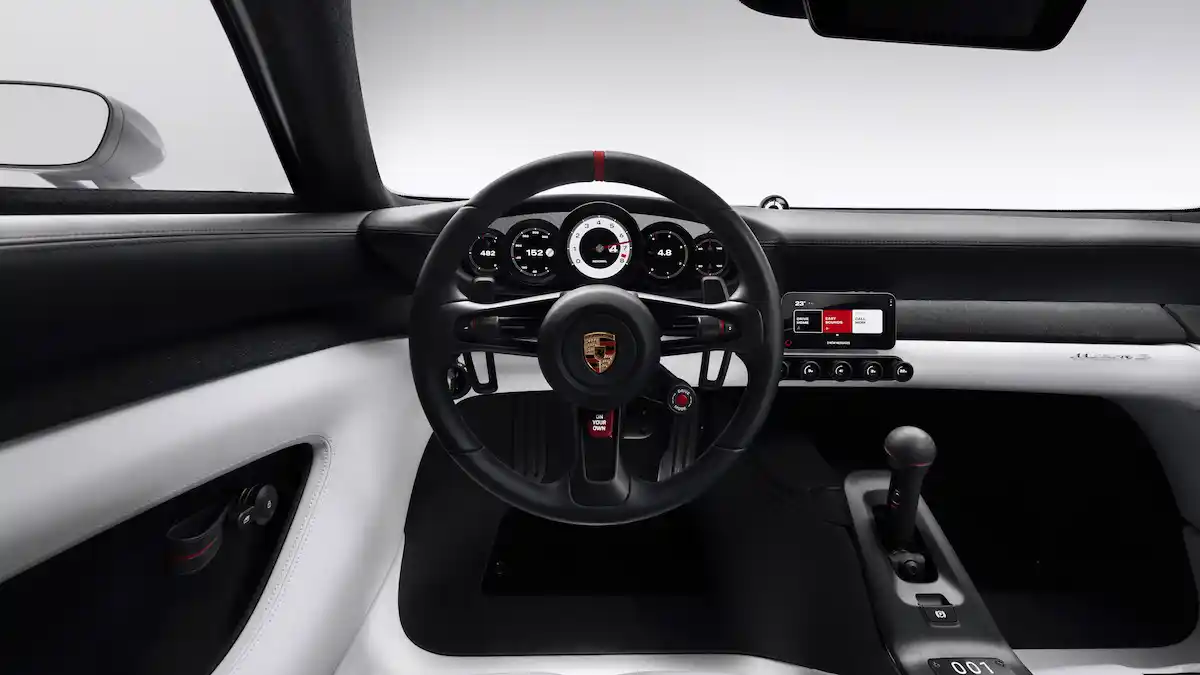
Inside, Porsche has taken a different approach from the screen-heavy cabins of modern cars. The Mission S has no permanently integrated center display or fixed passenger screen. Instead, functions are routed through the My Porsche app, while the circular digital instruments can adopt designs inspired by Porsche’s heritage. That approach keeps the focus on the driver while combining modern technology with traditional sports car controls.
The Biggest Questions Remain Unanswered
For all its strategic significance, the Mission S is still a vision model. Porsche has confirmed a mid-engined layout and a new platform, but it has not announced a production date, tentative prices, engine specifications or even whether the production car will use combustion power or an electric drivetrain.
There are rumours that the production form will use a flat-eight engine. Another set of reports suggest that it could have a price of around €500,000. Porsche has confirmed neither.
The powertrain decision will be especially important. A flat-eight combustion engine would represent a very different direction from an all-electric supercar, particularly after Porsche scaled back parts of its electrification plans. The company has also shown ambitious concepts before without putting them into production, including the Mission X in 2023.
A concept reveal is relatively inexpensive compared with developing an entirely new vehicle platform. It allows Porsche to communicate its ambitions without committing publicly to the cost, timing or technical details of a production model. The real evidence will come when Porsche confirms a powertrain and production schedule.
What The Mission S Means For The 911

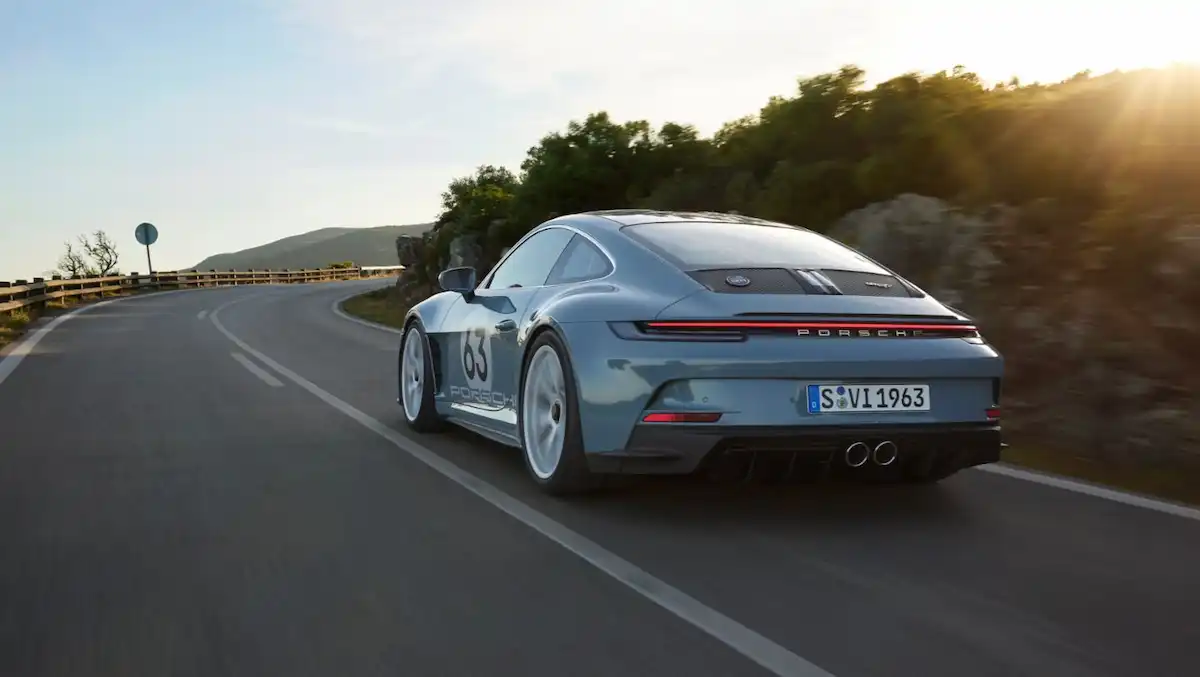
A permanent model above the 911 would also reshape Porsche’s sports car hierarchy. The 911 currently starts at $135,500 for the Carrera, while the Carrera 4 GTS Cabriolet costs more than $203,000. A model reportedly targeting around €500,000 would occupy a different price bracket altogether.
That gap could reinforce the 911’s position as Porsche’s core sports car while giving the company a more exclusive product at the top of its range. But Porsche will need to establish that the new model offers enough additional performance, engineering and exclusivity to justify the premium.

