

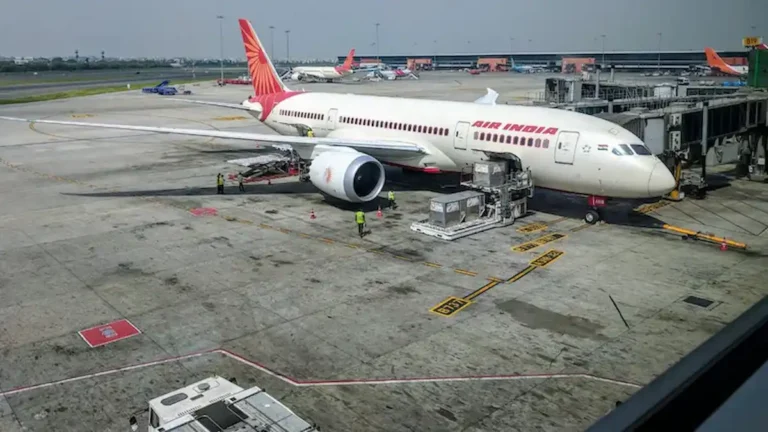
Air India has grounded a Boeing 787-8 Dreamliner (VT-ANX) after a pilot reported that the left engine fuel control switch failed to stay in the ‘RUN’ position and moved to ‘CUTOFF’ twice during engine startup. The issue was flagged after the aircraft completed a London Heathrow- Bengaluru flight. The airline immediately withdrew the jet from service and informed both Boeing and India’s aviation regulator about the incident.
Table of Contents
What Exactly Happened
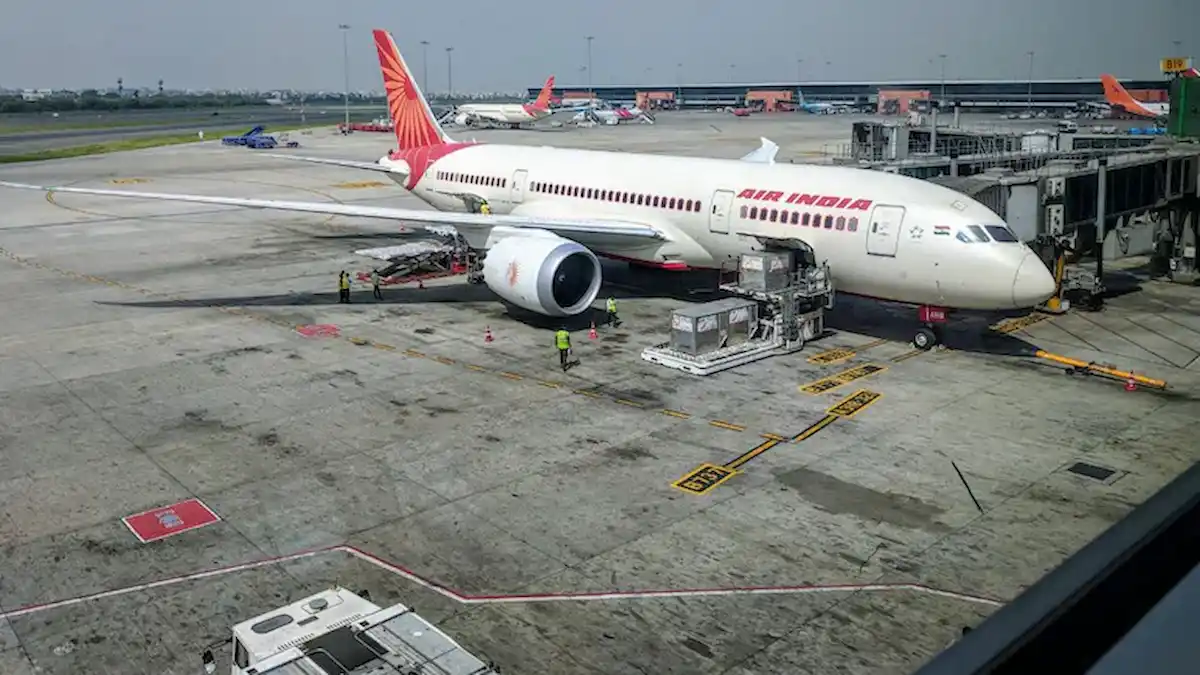
The aircraft was operating flight AI 132 from Heathrow to Bengaluru. According to Air India, one of the pilots reported abnormal behaviour of the left engine’s fuel control switch. During engine start, the switch reportedly did not remain locked in the ‘RUN’ position. Even after two attempts, it shifted to ‘CUTOFF’ automatically.
Once the airline received this information, the aircraft was grounded immediately. Air India confirmed that Boeing, the original equipment manufacturer, has been involved to examine the issue on a priority basis.
Boeing And DGCA Informed
Boeing has acknowledged the development and said it is in contact with Air India to ‘support the airline’s review of the matter’. Air India has also formally reported the development to the Directorate General of Civil Aviation (DGCA).
The airline reiterated that passenger and crew safety remains its top priority and that the aircraft will remain out of service until the issue is fully investigated and resolved.
Why Fuel Control Switches Matter

Fuel control switches regulate the flow of fuel into an aircraft’s engines. Pilots use them to start or shut down engines on the ground and to manually shut down or restart engines in case of an in-flight emergency.
On the Boeing 787, the switches are located below the thrust levers. They are spring-loaded and designed to stay firmly in position. To move a switch from ‘RUN’ to ‘CUTOFF’, a pilot must first pull it up and then shift it, making any accidental movement extremely unlikely. If a switch does move to ‘CUTOFF’, the effect is immediate- the fuel supply to the corresponding engine stops. This would shut down the engine.
Link To The 2025 Ahmedabad Dreamliner Crash
The incident has drawn attention because of the deadly Air India Boeing 787 crash in Ahmedabad in June 2025, which killed 260 people. A preliminary investigation report into that accident revealed that seconds after takeoff, the fuel control switches of both engines briefly moved from ‘RUN’ to ‘CUTOFF’, starving the engines of fuel. This effectively shut down the engines, and the plane did not have enoough altitude to attempt a recovery.
Cockpit voice recordings captured one pilot asking the other why the fuel was cut off, with the second pilot denying any such action. Moments later, the switches returned to the ‘RUN’ position. At the crash site, both switches were found in ‘RUN’, according to investigators.
Previous Inspections After The Crash
Following the Ahmedabad crash, the DGCA had ordered inspections of the fuel control switch locking mechanisms across Air India’s Boeing 787 and 737 fleets. At the time, the airline stated that no issues were found during those checks.
The latest grounding has renewed scrutiny of those inspections, especially considering the similarities in fuel switch behaviour.
Questions Raised By Public Disclosure
People came to know about the latest incident after Captain Amit Singh, founder of the NGO Safety Matters, openly shared it on social media. Singh stated that the crew observed abnormal fuel switch behaviour during engine start- ‘moved toward CUTOFF under light pressure‘.
It remains unclear why the flight continued if the issue was noticed during engine startup. Air India, however, maintains that the concern was reported to the company only after the aircraft had safely completed the flight and landed in Bengaluru.
What Happens Next
The grounded Dreamliner will now undergo detailed checks in coordination with Boeing. The DGCA has been informed and is expected to monitor the investigation closely. With fuel control switches already under intense scrutiny, the findings from this case could have wider implications for inspections and procedures across the fleet.
Aviation Ministry: ‘Both Switches Satisfactory!’
On Tuesday (Feb 3), the Aviation Ministry said that inspections on the grounded aircraft have found both fuel control switches ‘satisfactory’. DGCA has shared an image of the statement on X (previously Twitter). The statement said that detailed checks recommended by Boeing were carried out by Air India’s engineering team in the presence of DGCA officials. It further cautioned that improper handling of these switches can cause them to slip.
The statement said “Both left and right switches were checked and found satisfactory, with the locking tooth/pawl fully seated and not slipping from RUN to CUTOFF. When full force was applied parallel to the base plate, the switch remained secure. However, applying external force in an incorrect direction caused the switch to move easily from RUN to CUTOFF, due to the angular base plate allowing slip when pressed improperly with finger or thumb”
DGCA further said that the method shown in the viral video was incorrect and advised to circulate Boeing’s recommended procedure for operating the switches to all crew members.
Switch Module To Be Sent To Boeing For Inspections
Air India has decided to send the impacted switch control module to Boeing, for detailed inspections. The module on this aircraft has reportedly clocked just 3,440 operational hours. It was installed in 2024. The total life of each unit is 20,000 hours. Air India hasn’t commented on the incident yet.
Featured image source: NDTV


