

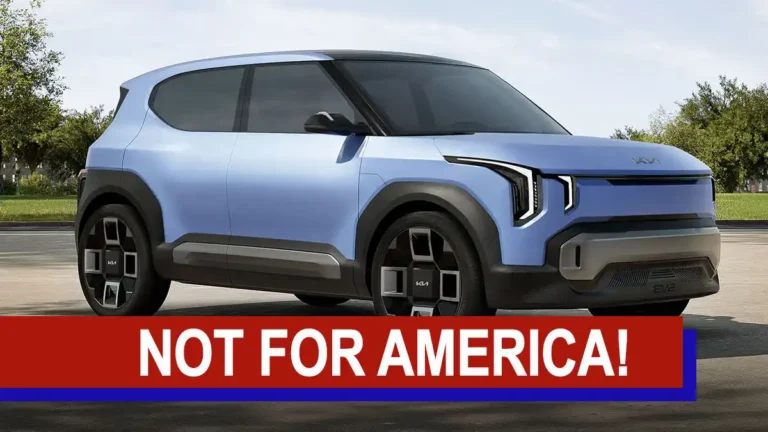
While auto shows in the U.S. continue to fade into the background, Europe and Asia are quietly reminding everyone why they still matter. The latest example is the Kia EV2, a small electric crossover-hatch that just debuted at the Brussels Motor Show- and it might be the most compelling affordable EV Kia has ever shown. It looks unapologetically strange and is packed with smart tech. The catch is simple and frustrating: it’s NOT coming to the United States.
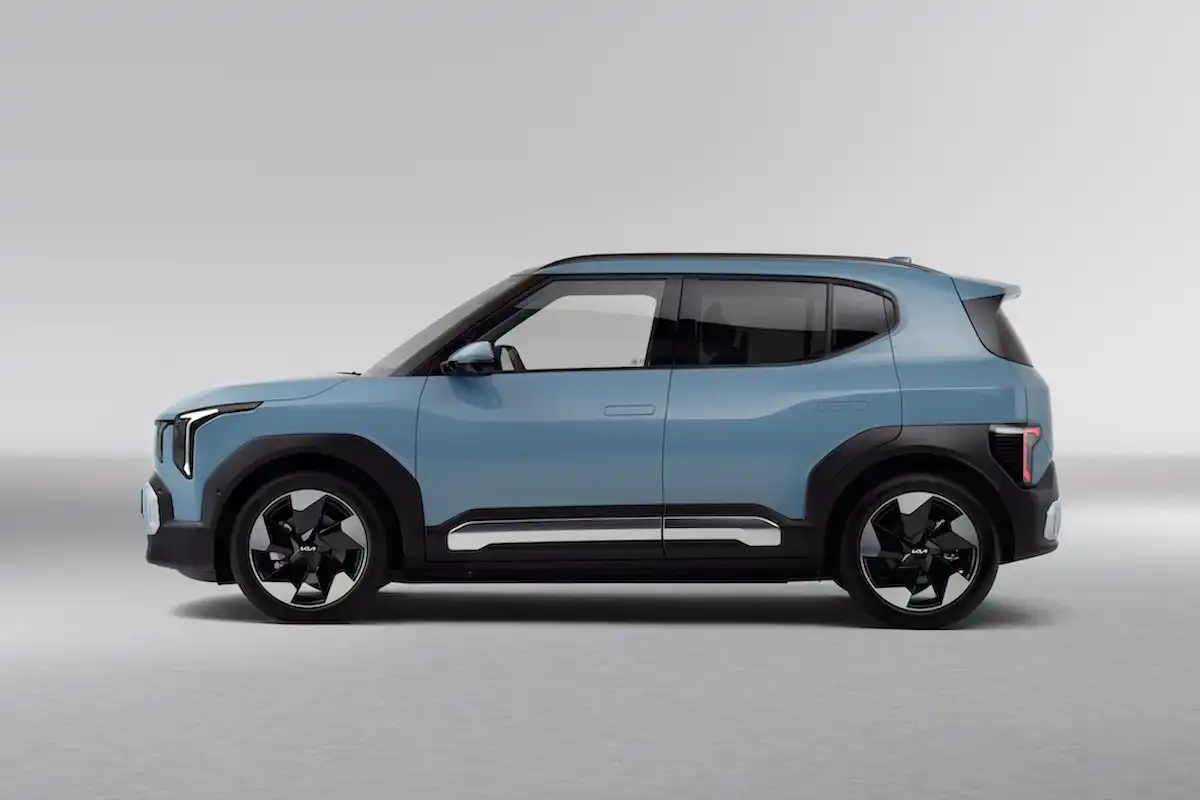
Table of Contents
The EV2 is tiny by American standards, measuring just under 160 inches (4064mm) long and about 62 (1575mm) inches tall. That makes it noticeably smaller than the old Kia Soul, yet it promises better range, faster charging, and a far more modern feel. In Europe, it’s expected to start below €30,000, which only makes the absence of a U.S. version sting more.
Small Size, Big Range
Despite its footprint, the EV2 isn’t compromised where it counts. Kia says the long-range version can travel up to 278 miles on the WLTP cycle, while the standard version (with the 42.2-kWh battery pack) still manages a respectable 197 miles. Charging times are solid, too. The EV2 can fast charge from 10 to 80 percent in about 30 minutes, and the smaller battery can recharge surprisingly quickly on AC power.
Underneath, the EV2 rides on Hyundai Motor Group’s E-GMP platform, using the 400-volt setup shared with the EV3 and EV4. Front-wheel drive is standard, with output tuned for efficiency rather than outright speed.
This is the kind of efficiency-first EV that makes sense for daily driving, city use, and tight parking- exactly the kind many American buyers say they want but rarely get.
A Weird Design Indeed!
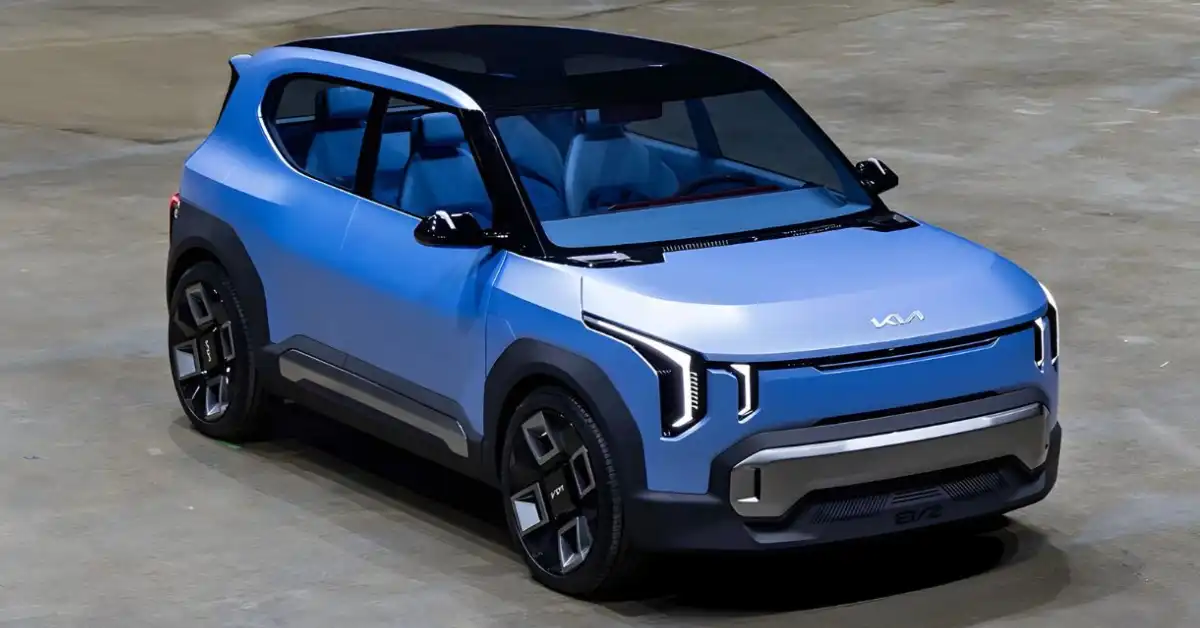
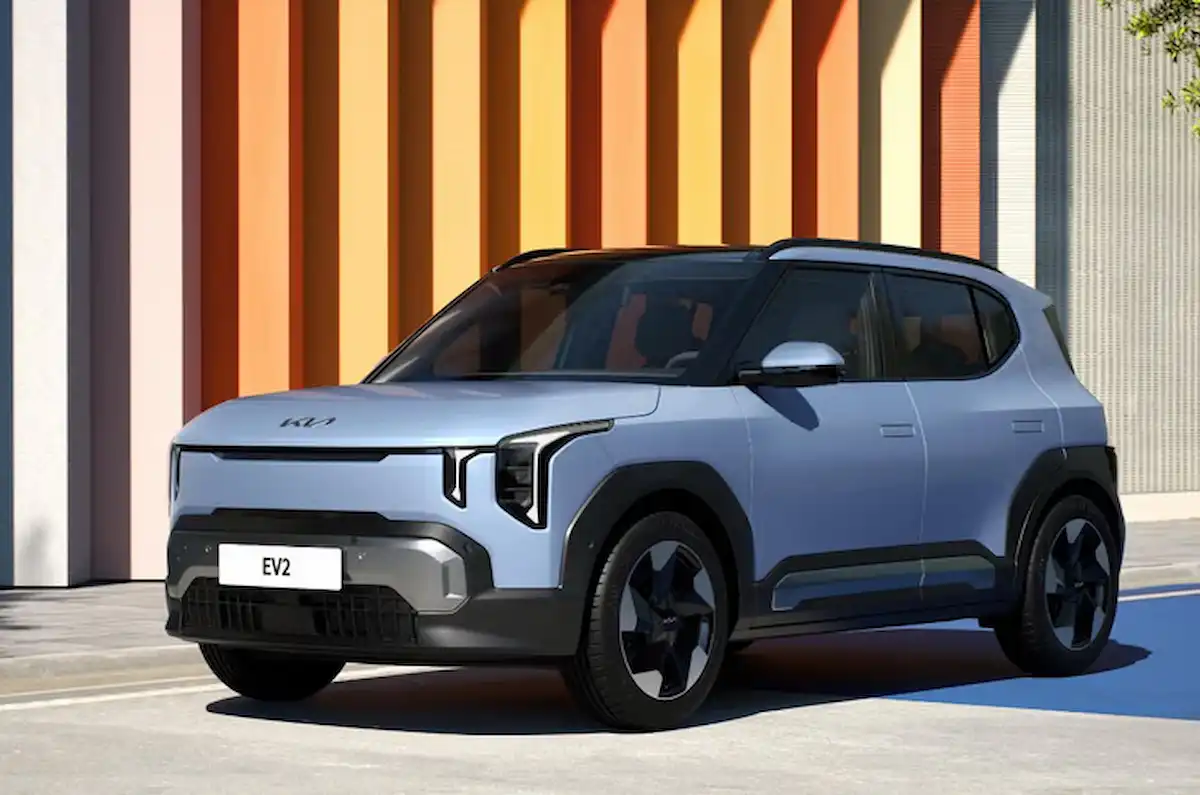
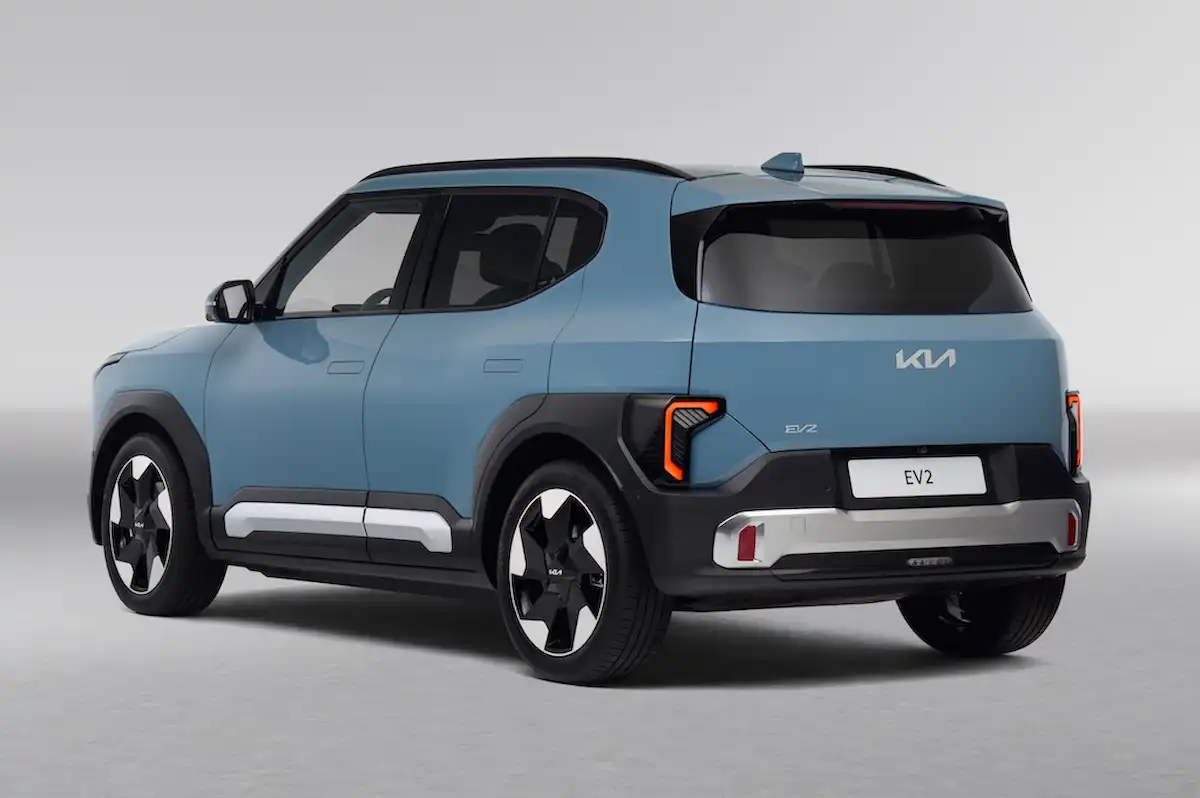
The best thing about the EV2 might be how it looks. It’s clearly a Kia, and clearly related to the EV3, but it also feels refreshingly weird in a good way. The production version stays remarkably close to the concept, which almost never happens.
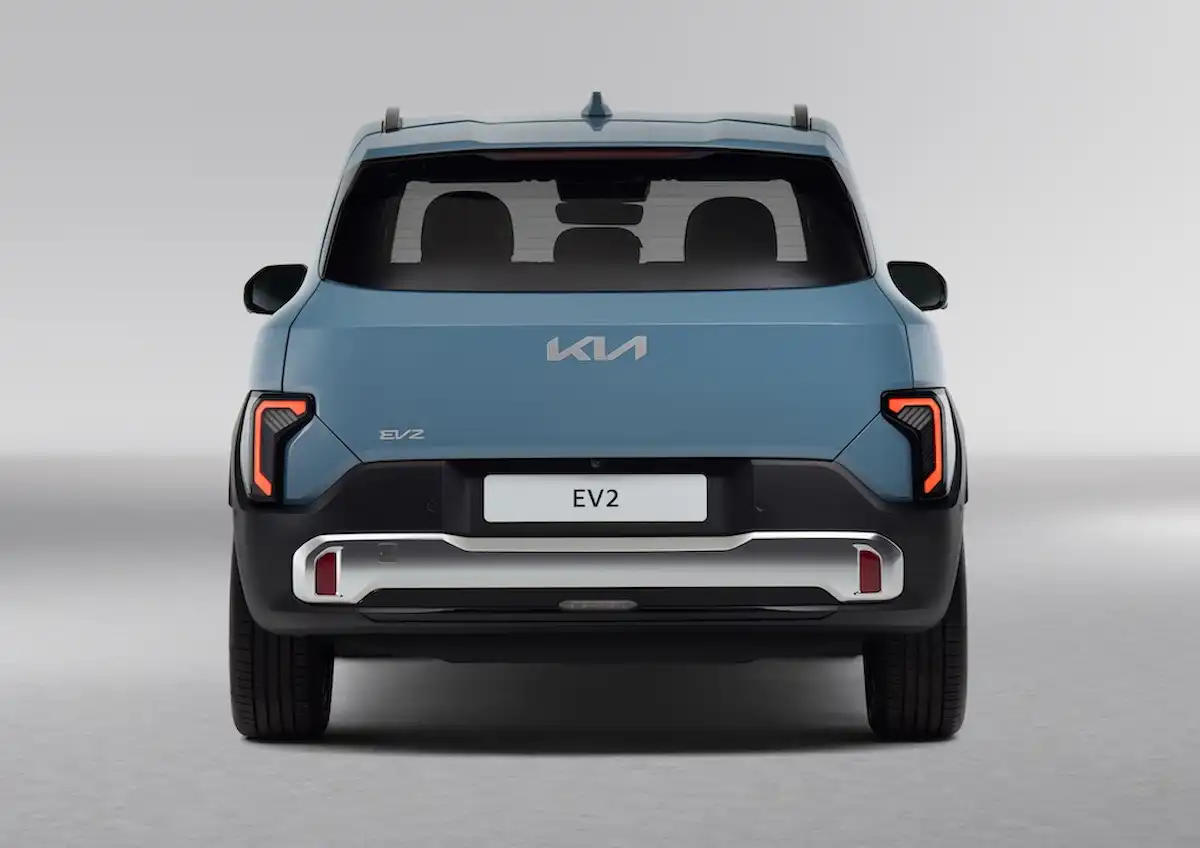
The grille-less face, split headlights, upright stance, and chunky proportions, in a way, make it look cartoonish in the best way. Around back, the low-mounted L-shaped taillights and smooth tailgate make it stand out in a sea of generic EV shapes. Kia is also leaning into bold wheel designs, ranging from 16 to 19 inches, and offering real colors instead of the usual grayscale EV palette. It looks fun. That alone sets it apart.
A Surprisingly Clever Interior
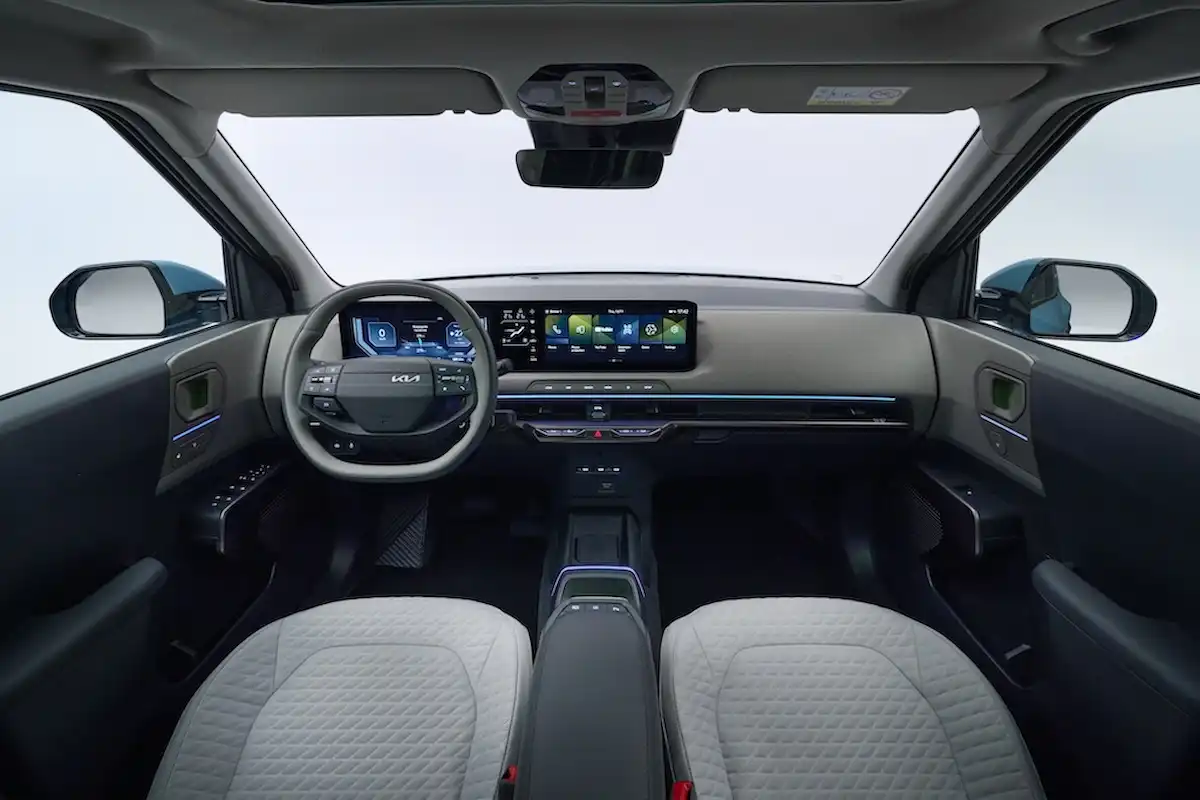
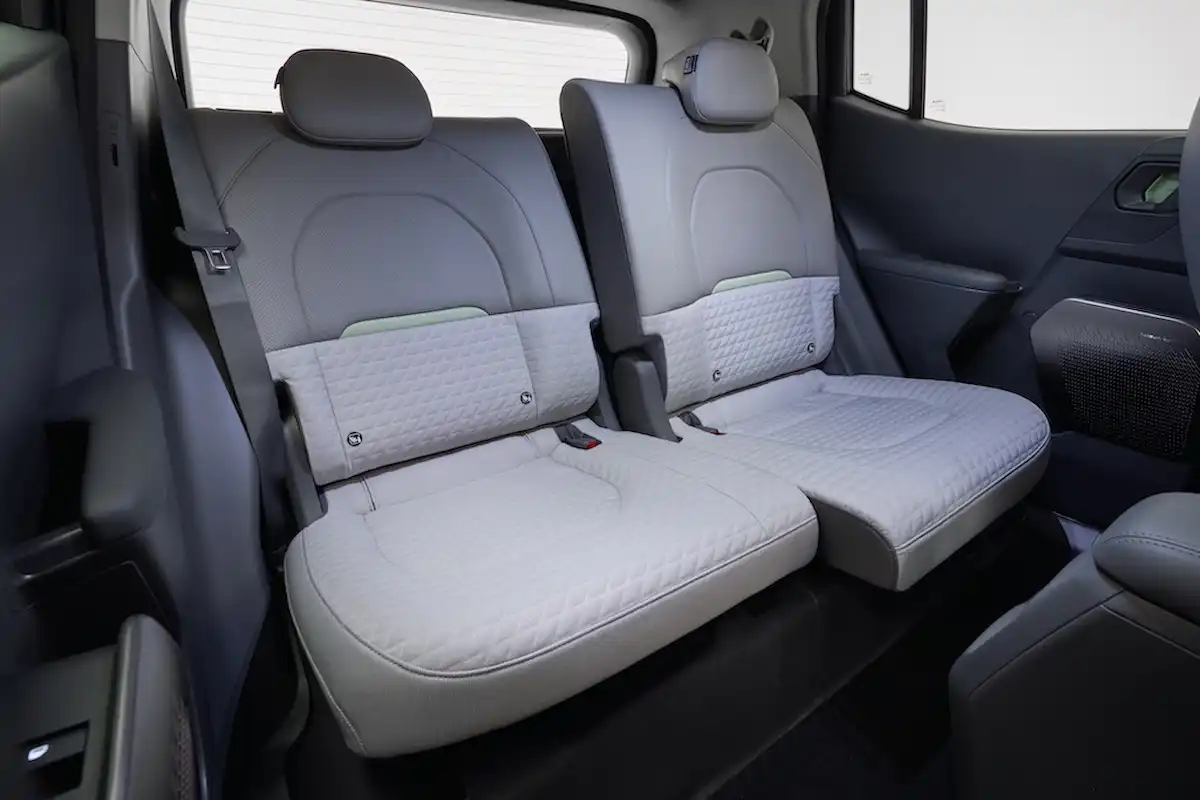
Inside, this EV continues to punch above its weight. The cabin is airy, open, and well thought out, helped by thin pillars and a long wheelbase. Buyers can choose between a traditional three-seat rear bench or two sliding and reclining rear seats, with legroom that rivals larger cars. Easter eggs like friendly messages etched into the door handles give the EV2 a sense of humor that most EVs completely lack.
The wide display setup will feel familiar if you’ve been in other Hyundai Motor Group EVs, but the execution here feels cleaner and more playful. Two-tone color schemes, clever storage areas, and small design touches give it personality without trying too hard. Even base models look far from cheap. It’s practical, but it doesn’t feel stripped down.
What’s impressive is the feature list. Vehicle-to-load and vehicle-to-grid options are available. There’s a pet mode too. Over-the-air updates are supported. Advanced driver assistance systems (ADAS) is present, including hands-on adaptive cruise and remote parking assist. For an entry-level EV, that’s a lot.
Why The EV2 Matters, And Why It Hurts
The EV2 matters because it represents a segment the U.S. market is largely missing. Affordable, small, well-designed EVs with real range and real personality are thriving overseas. In America, they’re rare.
Kia says the EV2 will enter production in Slovakia soon and go on sale in Europe and Asia this year. Unless something dramatically changes, it’s highly unlikely to make it to U.S. showrooms. That’s a shame, because this is exactly the kind of EV that could win over urban buyers, younger drivers, and people who don’t want a full-size electric SUV.
The EV2 proves that small doesn’t have to mean boring, cheap, or compromised. Unfortunately for U.S. buyers, it also proves that some of the best EVs are still being built for everyone else.


