

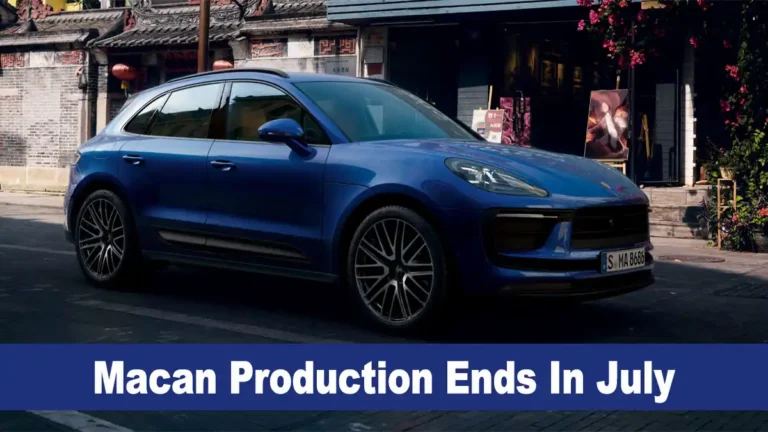
Porsche is set to discontinue the internal combustion engine-powered Macan globally by the end of July this year. It will mark the end of one of its most popular internal combustion engine (ICE) models. Porsche had earlier announced that ICE Macan’s sales would stop in Europe, due to the stricter safety and cybersecurity rules kicking in. The latest move signals a complete shift to electric power.
Table of Contents
Why Porsche Is Ending The ICE Macan’s Production
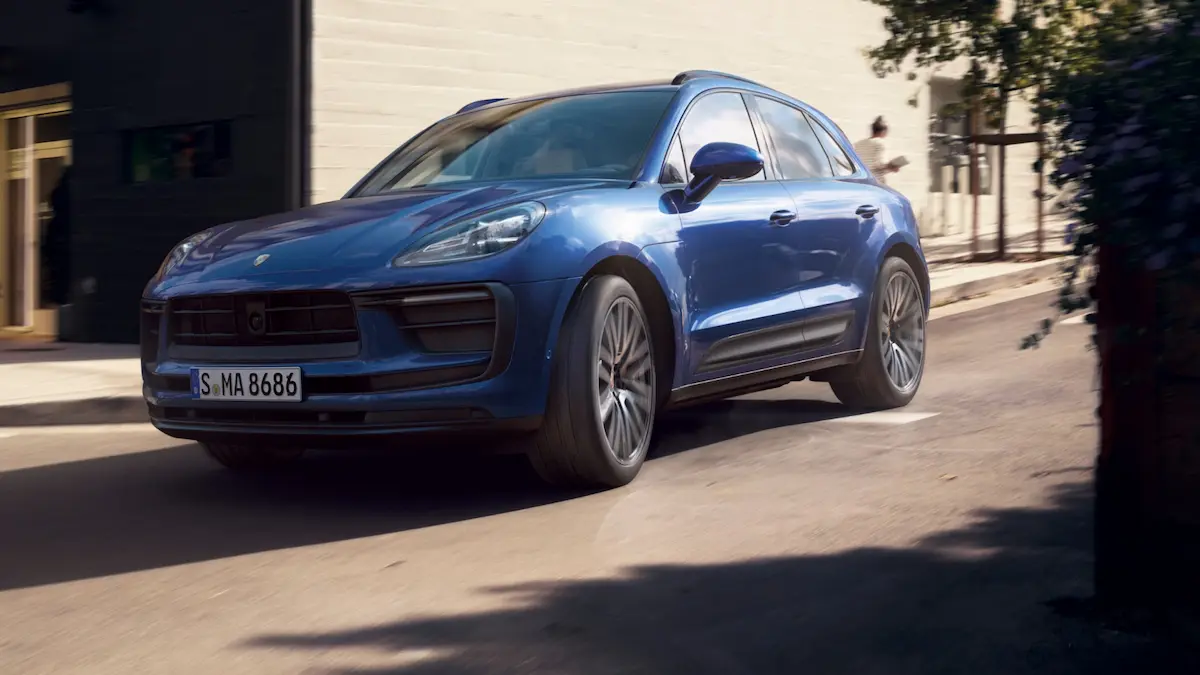
The first step in this phase-out began in early 2025, when Porsche stopped selling the ICE Macan in Europe. This was due to the European General Safety Regulation (GSR2), which introduced stricter requirements for vehicle safety and cybersecurity.
To meet these, Porsche would have had to redesign the Macan’s electronic systems completely. Instead of investing in the current platform, the company chose to end its production. This decision has now been extended globally, bringing the internal combustion Macan’s journey to a close.
Macan To Become An EV-Only Model
Porsche has confirmed that the Macan badge will now be used only for battery-electric vehicles. This means there will be no pure combustion or hybrid Macan in the near future.
A new crossover with an internal combustion or hybrid setup is expected only around 2028. This future model will be based on a new-generation platform related to the Audi Q5. Until then, Porsche’s focus in this segment will remain fully electric.
Strong Sales Despite Phase-Out
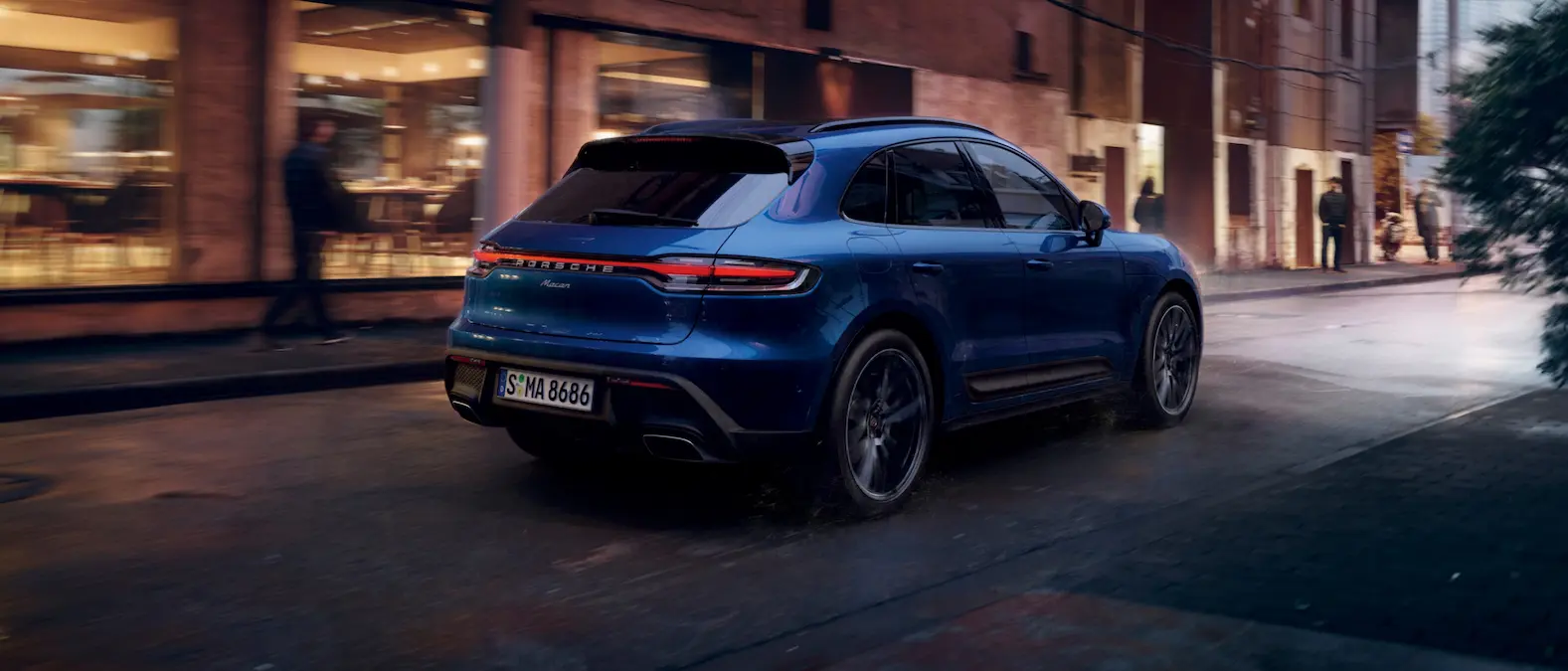
The decision to stop the internal combustion SUV comes at a time when demand for the model is still strong. In the first half of 2026, Porsche delivered 35,315 Macans worldwide.
Out of this, 19,695 were ICE-powered models, while 15,620 were electric. This shows that the ICE model still accounted for a larger share of sales.
However, total Macan deliveries dropped by 22 percent compared to the previous year. Porsche has linked this decline to multiple reasons, including slower growth in electric vehicle adoption, a strong performance in the previous year, and the removal of tax benefits for EVs and hybrids in the United States.
Slower EV Transition Than Expected
Volkswagen Group CEO Oliver Blume has admitted that Porsche underestimated how quickly customers would shift to electric vehicles. The move from ICE to electric has been slower than the company expected.
To manage demand in key markets, Porsche reportedly built extra units of the ICE Macan in advance. Because of this, deliveries of ICE models in markets like the United States are expected to continue until 2027, even after production officially ends.
Wider Challenges For Electrification
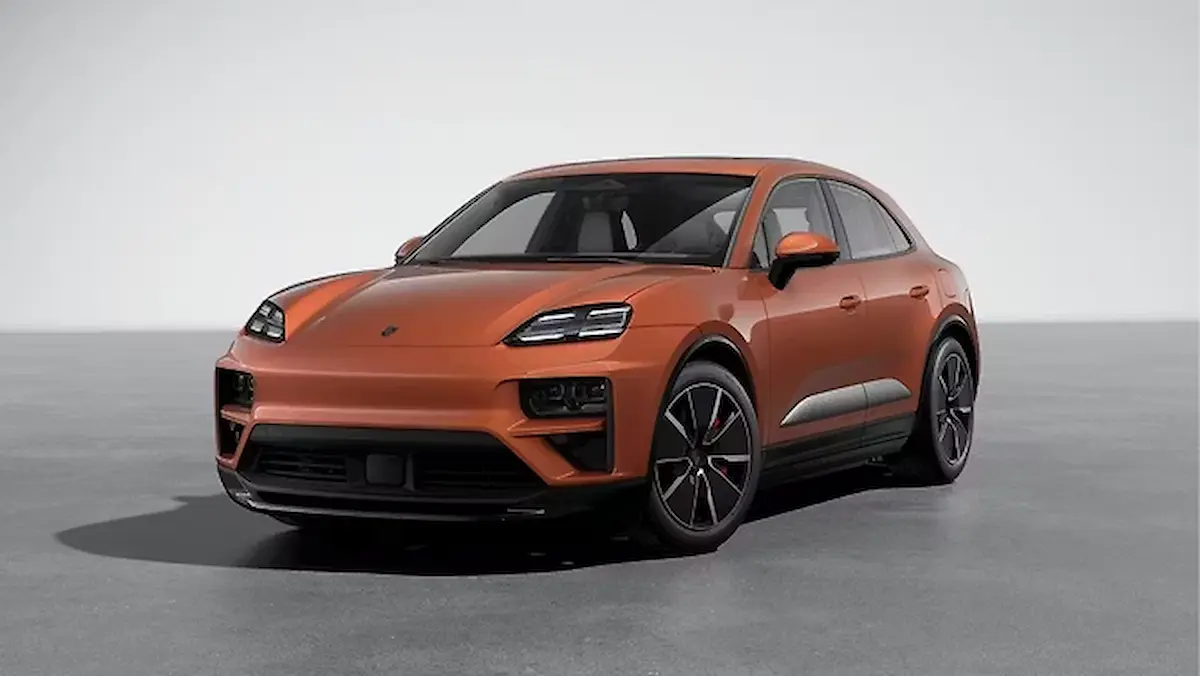
The Macan’s phase-out also highlights a larger challenge for Porsche and the Volkswagen Group. In the first half of 2026, Porsche delivered around 23,700 electric vehicles, which is a drop of about 31 percent compared to last year.
At the group level, global EV deliveries declined by 5.8 percent. Sales dropped sharply in key markets like the United States and China, although Europe continued to show growth.
Despite these challenges, Porsche is continuing with its electric plans. In fact, customer deliveries of the electric Cayenne began at the end of June, marking another step in its transition strategy.
End Of An Iconic Model
With the internal combustion Macan going out of production, Porsche is saying goodbye to one of its most successful models. The SUV has played a major role in the brand’s global growth over the years. The final internal- combustion units are likely to become collectibles for enthusiasts.


