

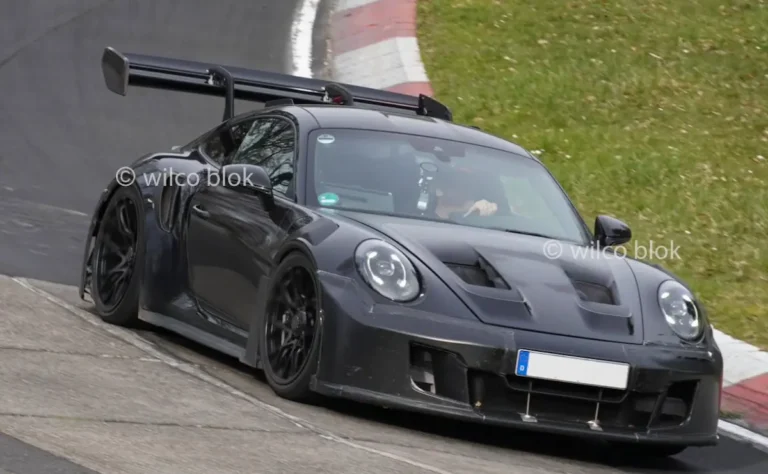
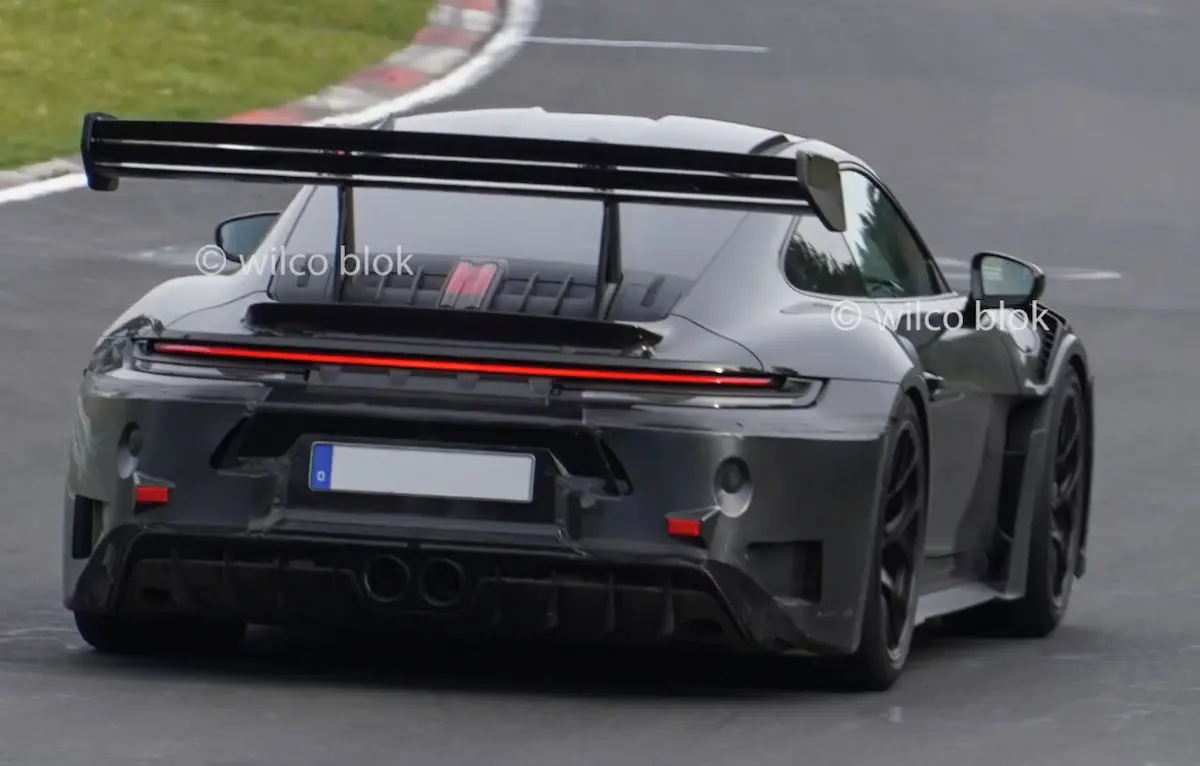
Porsche 911 GT3 RS facelift prototypes have been spotted testing overseas, and while the design changes appear minimal, the bigger story could lie under the skin. At first glance, the car looks almost identical to the outgoing model. Up front, changes are limited to slight tweaks in the bumper. Any major visual overhaul there seems unlikely. The design changes are concentrated at the rear.
Table of Contents
Subtle Design Changes, Functional Gains
The facelift introduces a small but notable revision to the rear aero setup. The current model features three fins on either side, while the updated version gets four. On its own, that may seem cosmetic. But paired with a newly visible air channel below the tail light bar, it points to improved airflow and better thermal management. Improved cooling equipment could be an indicator of increased performance.
Turbo Power Could Be On The Way
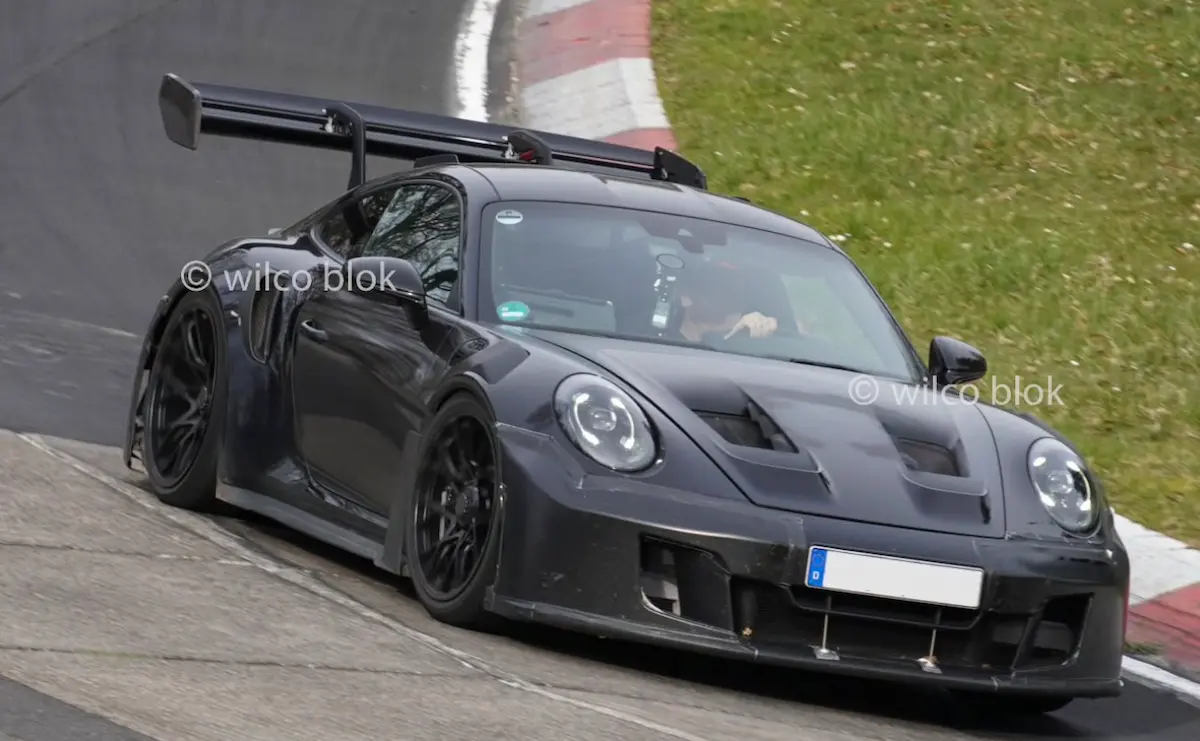
So far, the GT3 RS has remained one of the last naturally aspirated performance-centric cars in the 911 lineup. Turbocharged engines are currently kept reserved to the more extreme 911 GT2 RS. That could be about to change.
With tightening emissions regulations, including Euro 7 norms, Porsche is expected to electrify parts of its lineup. A 48V mild-hybrid system is likely, and there is growing speculation that the GT3 RS could adopt a turbo-assisted setup.
ALSO READ: Confirmed: Porsche Working On A New Hypercar!
Porsche has already previewed this direction with the Porsche 911 Carrera GTS T-Hybrid, which uses a turbocharged flat-six paired with hybrid tech to deliver over 530 hp. A similar approach on the GT3 RS would mark a significant shift in character.
If the GT3 RS does move to a turbo-hybrid setup, it would represent one of the biggest changes in the nameplate’s history. The current car’s appeal lies in its high-revving, naturally aspirated engine and track-focused purity.
Adding forced induction would fundamentally alter that formula, potentially unlocking significantly higher performance while meeting stricter emissions standards.
ALSO READ: 2026 Porsche 911 Turbo S (992.2) Revealed With 711hp Twin-Turbo Hybrid Engine
Meanwhile, the next Porsche 911 GT2 RS is expected to push the envelope even further, with reports pointing to outputs nearing 1,000 hp.
While the visual updates are subtle, mechanical changes could be transformative. Improved cooling, revised aerodynamics, and the potential shift to a turbo-hybrid engine- all point to a deeper evolution. It will be more than just a facelift, capable of redefining what the GT3 RS stands for in the modern era.


