

Aero India 2027 will be held from February 8 to 12, 2027, at Yelahanka Air Force Station in Bengaluru, Karnataka. The 16th edition of Asia’s largest airshow is expected to be one of the most important in its history, with major Indian defence programmes approaching key decisions, a rapidly expanding domestic aerospace industry and several large international partnerships in the pipeline. The event will bring together the Indian armed forces, defence manufacturers, global aerospace companies, startups and government agencies at a time when India is pushing strongly for self-reliance in defence.
| Dates | February 8 to 12, 2027 |
| Location | Yelahanka Air Force Station, Bangalore |
| Website | https://aeroindia.gov.in/ |
Table of Contents
The exhibition is being organised by the Defence Exhibition Organisation under the Department of Defence Production, Ministry of Defence. The Indian Air Force, Hindustan Aeronautics Limited (HAL), DRDO, Department of Space and Ministry of Civil Aviation are co-organisers. HAL is the nodal agency, while Bharat Electronics Limited is supporting the event. Here is all you need to know.
When And Where Is Aero India 2027?
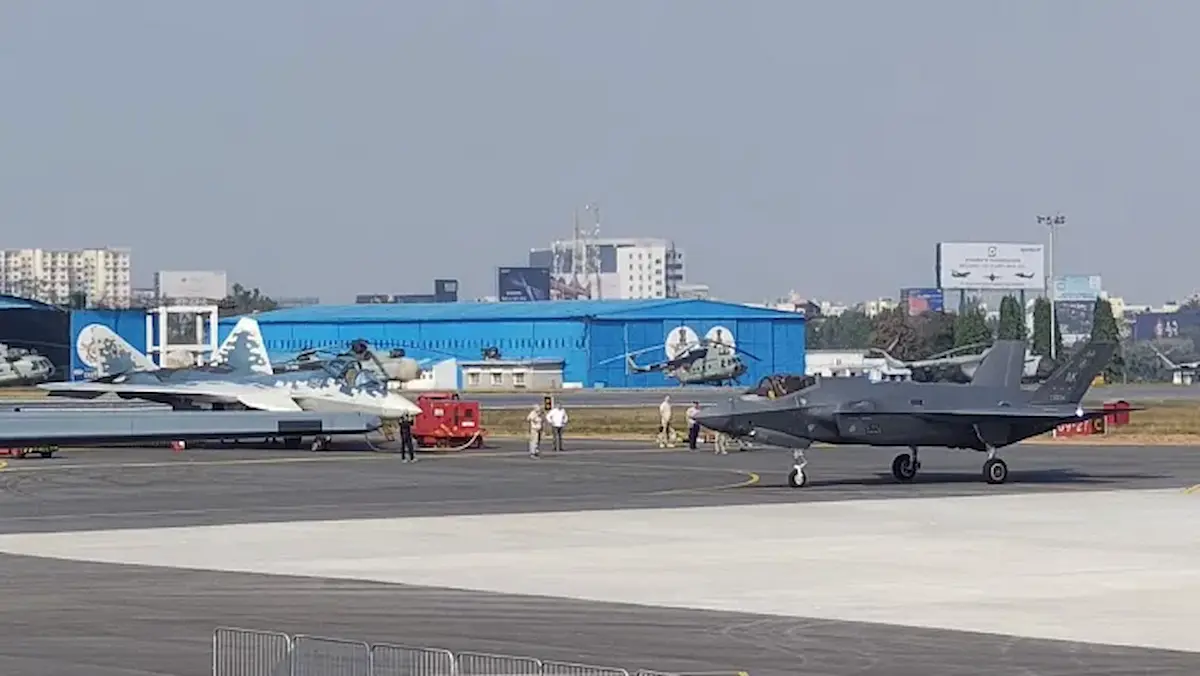
Aero India 2027 will take place over five days from February 8 to February 12, 2027. The venue will once again be the Yelahanka Air Force Station in Bengaluru.
The event will combine an exhibition of aircraft, defence equipment and aerospace technologies with business meetings, government-level discussions and flying displays. Exhibitor registration opened on September 3, 2026, through the official Aero India website, with booth allocation expected to close in October 2026.
The show comes at an important time for India’s defence sector. The country’s defence budget has crossed ₹7.85 lakh crore, while indigenous defence production has reached ₹1.78 lakh crore. Defence exports also touched a record ₹39,000 crore in FY 2025-26.
ALSO READ: Aero India 2027 Dates Announced!
How Will The Aero India 2027 Exhibition Be Organised?
The 2027 exhibition will spread across nine hangars, designated A through I, along with an outdoor static display area.
Hangars A and B will be used for Indian Air Force and DRDO displays. Hangars C, D and E will accommodate major equipment manufacturers and Tier-1 international suppliers. Hangars F through I will focus on small and medium enterprises and indigenous startups.
This arrangement highlights the changing structure of India’s defence industry. Large government organisations and global manufacturers will remain important, but a growing number of Indian private companies, MSMEs and startups are now developing defence technologies.
The previous Aero India edition attracted around 900 exhibitors, including 150 international companies. The 2025 event also brought 26 defence ministers and 118 CEOs from the global aerospace and defence industry. Germany returned as the third-largest exhibitor nation after an eight-year gap, with more than 20 companies taking part. More than two dozen American companies also participated.
If the growth seen in recent editions continues, Aero India 2027 could exceed those numbers.
What Happened At Aero India 2025?
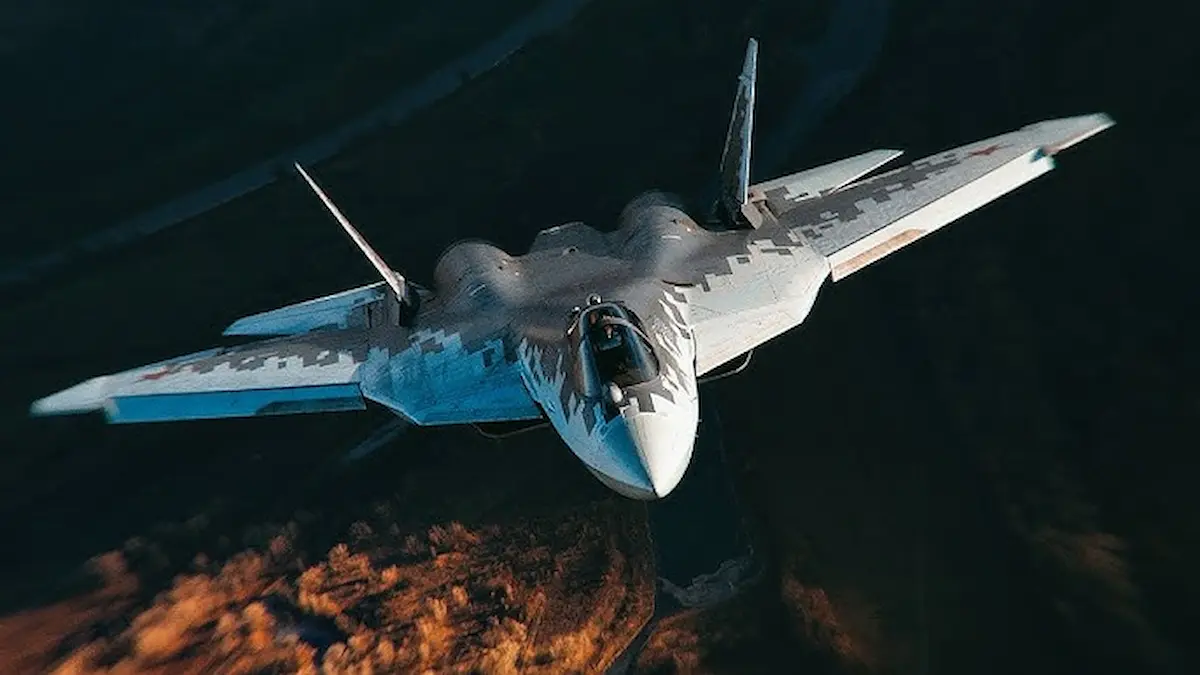
The previous edition, held from February 10 to 14, 2025, was conducted under the theme “The Runway to a Billion Opportunities.” It generated more than 250 business-to-business partnerships with an announced combined value of over ₹75,000 crore, or roughly $9 billion, during the Bandhan ceremony.
The Round Table conference brought together government officials and senior executives from 26 countries. Companies represented included Boeing, Lockheed Martin, Israel Aerospace Industries, General Atomics, Liebherr Group, Raytheon Technologies and Safran.
Several major agreements were also announced.
HAL and Safran Helicopter Engines signed an MoU covering the joint development, manufacture and lifetime support of helicopter engines. BEL and the Aeronautical Development Agency signed an MoU covering the Integrated Wireless Bus Controller and other line-replaceable units for the Advanced Medium Combat Aircraft.
Godrej & Boyce also signed an agreement with ADA for AMCA flight-control actuators.
ALSO READ: Aero India Needs To Move Out Of Bengaluru: Here’s Why!
India and the United Kingdom launched Defence Partnership–India, signed a contract for Laser Beam Riding MANPADs, agreed to manufacture Lightweight Multirole Missiles and confirmed plans for India’s first ASRAAM assembly and test facility in Hyderabad.
The Andhra Pradesh Economic Development Board signed MoUs worth ₹2,458.84 crore with four aerospace and defence companies. Defence Minister Rajnath Singh also said that 250 agreements had been finalised to establish industrial units in the Defence Industrial Corridors of Uttar Pradesh and Tamil Nadu.
Why Aero India 2027 Could Be More Important
Several major defence programmes are approaching critical decision points around the time of the show.
The most significant could be the Advanced Medium Combat Aircraft, or AMCA. The production contract decision is expected in early 2027. If that decision comes before or during Aero India, the event could become a major platform for India’s next-generation fighter programme.
The AMCA programme is particularly significant because production has been reserved for private-sector-led consortia. It would mark a major change in India’s fighter manufacturing ecosystem and give private industry a much larger role in the production of a fifth-generation combat aircraft.
The Multi-Role Fighter Aircraft programme is another major focus. India is preparing for the potential acquisition of 114 fighter jets, with negotiations involving France and domestic production expected to remain a major part of the discussion.
ALSO READ: ‘Still In The Game’: Rolls-Royce Confirms Interest In Developing AMCA Engine
The timing of Safran’s M88 engine maintenance, repair and overhaul facility in India, expected to become operational by late 2026, could also make the company an important participant at the show.
India’s Fighter Squadron Shortfall
Aero India 2027 will also take place against the backdrop of a major challenge facing the Indian Air Force.
The IAF currently operates around 29 fighter squadrons against a sanctioned strength of 42. The retirement of the final MiG-21Bis squadrons and the planned withdrawal of six Jaguar squadrons by 2032 could increase the gap unless new aircraft enter service at a faster rate.
The LCA Mk1A, MRFA and AMCA programmes are therefore crucial to the future structure of the IAF.
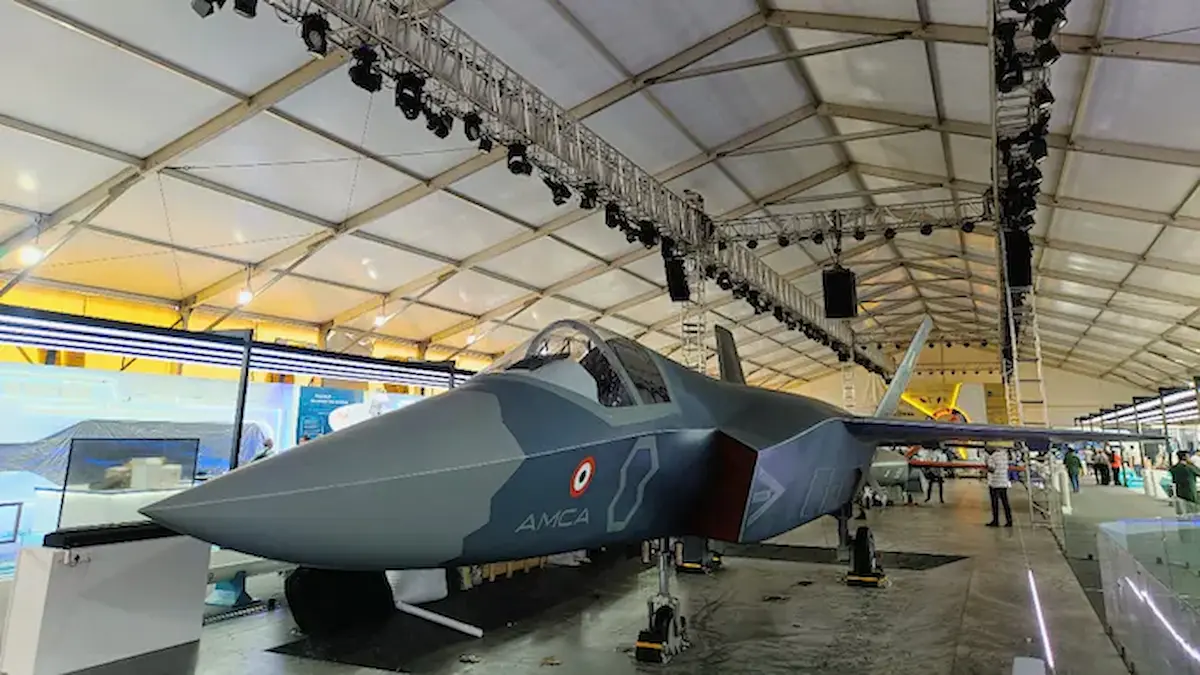
At the same time, India continues to rank among the world’s leading air powers. The country was ranked third globally in 2026 airpower rankings, behind the United States and Russia and ahead of China.
India also remained the world’s second-largest arms importer between 2021 and 2025, accounting for 8.2% of global arms imports, according to SIPRI’s March 2026 assessment.
India Wants To Move From Buying To Developing
One of the biggest themes at Aero India 2027 will be India’s attempt to reduce dependence on foreign defence suppliers.
The draft Defence Acquisition Procedure (DAP) 2026 represents an important change in this direction. The proposed framework moves beyond the traditional “Made in India” approach toward what the government calls an “Owned by India” model.
Under this approach, India would seek greater control over intellectual property, including source code, critical design information and the ability to upgrade defence systems.
This could significantly change how foreign defence companies work with Indian partners. Instead of simply selling equipment to India, international manufacturers could increasingly be expected to participate in joint development, technology transfer and domestic production.
The United States has also signalled support for deeper defence technology partnerships and co-production with India.
What Does DAP 2026 Mean For Foreign Companies?
The proposed DAP 2026 framework sets a target of ₹50,000 crore in annual defence exports by 2030.
It also sets a 60% indigenous content threshold for participation in Indian procurement programmes. At the same time, the government has proposed changes to foreign direct investment rules for the defence industry.
Companies seeking defence licences could be allowed up to 75% FDI through the automatic route, while investments of up to 100% could be permitted through the government approval route.
These changes are important for international companies attending Aero India because India is becoming not only a major defence customer but also a potential manufacturing and export base.
The Ministry of Defence has also doubled financial delegation limits for military procurement and research and development. The move is intended to speed up decision-making and contract execution.
India’s Private Defence Industry Is Growing
Aero India 2027 will showcase how much India’s private defence sector has expanded.
More than 700 industrial licences have been issued to 436 companies in the defence sector. Under the iDEX programme, 549 problem statements have been identified, involving 619 startups and MSMEs. By February 2025, 430 contracts had been signed.
This growing industrial base will be visible across the exhibition, particularly in Hangars F through I, which are dedicated to MSMEs and indigenous startups.
Investment in defence manufacturing is also increasing. In June 2026, Merlinhawk Aerospace and Vega Composites inaugurated an advanced aerospace composites facility at Shoolagiri in Tamil Nadu’s Defence Industrial Corridor.
Other companies are developing capabilities in areas ranging from drones and propulsion to artificial intelligence, missiles and aerospace components.
Drones Will Be A Major Focus
Unmanned systems are expected to receive significant attention at Aero India 2027.
The IAF has announced Dronathon-2026, a procurement and demonstration event for Indian UAS and counter-drone companies. The initiative is likely to create momentum for the drone sector ahead of the Bengaluru airshow.
India’s private industry is already expanding in this area. Vector Technics has positioned itself as an integrated drone propulsion manufacturer, while SPH Aviation has launched its iQuantara defence drone brand with plans for large-scale production.
Indian companies are also developing AI-powered counter-drone systems capable of detecting and tracking multiple targets.
The growing importance of drones is likely to make unmanned systems, counter-UAS technology and autonomous defence systems some of the most visible categories at Aero India 2027.
Major Indigenous Weapons And Aircraft To Watch
Several Indian defence systems could attract attention at the show following important developments in 2026.
DRDO completed final trials of the ULPGM-V3 precision-guided missile in May 2026. The system demonstrated both air-to-ground and air-to-air capabilities, moving it toward serial production clearance.
The RudraM-II air-to-surface missile also completed successful flight testing in June, while the indigenous LRGB Khagantak precision glide bomb underwent a successful trial in September.
The DRDO also handed over Final Operational Clearance for the indigenous Netra AEW&C system to the IAF in June.
India has continued to strengthen its missile-defence capabilities as well. In July, DRDO successfully tested interceptors designed to engage missiles at ranges of up to 5,000 kilometres in three consecutive flight tests.
These developments will give Aero India 2027 a strong indigenous technology focus.
Tejas And AMCA Will Be Central To The Show
The LCA Mk1A programme will remain another major attraction.
GE Aerospace delivered three F404-IN20 engines to HAL in September 2026, supporting Tejas Mk1A production. The programme remains important to the IAF’s efforts to increase its fighter fleet.
The AMCA, meanwhile, represents India’s longer-term ambition to design and manufacture a fifth-generation fighter domestically.
The programme is entering a crucial phase. The engine question remains important, with negotiations between India and GE Aerospace reportedly affected by a sharp increase in the price of the F414 engine.
If the AMCA production decision arrives before Aero India 2027, the show could become a major milestone for India’s combat-aircraft industry.
More Indigenous Manufacturing Is Coming
India’s aerospace manufacturing ecosystem is expanding beyond fighters.
Tata Advanced Systems is developing Airbus C-295 military transport aircraft at its Vadodara facility. The programme represents India’s first privately manufactured military aircraft and is an important step in expanding private-sector aircraft production.
The first domestically assembled C-295 also completed its maiden test flight from Vadodara in June 2026.
Engine development is another growing area. Godrej Aerospace has committed ₹100 crore toward aero-engine research and development over three years. Paninian India has also unveiled the Yantur 4.5 kN turbofan engine, designed for the SVAYATT-L1 cruise missile and developed with a scalable architecture for future applications.
These projects reflect India’s broader attempt to develop critical aerospace technologies within the country.


