

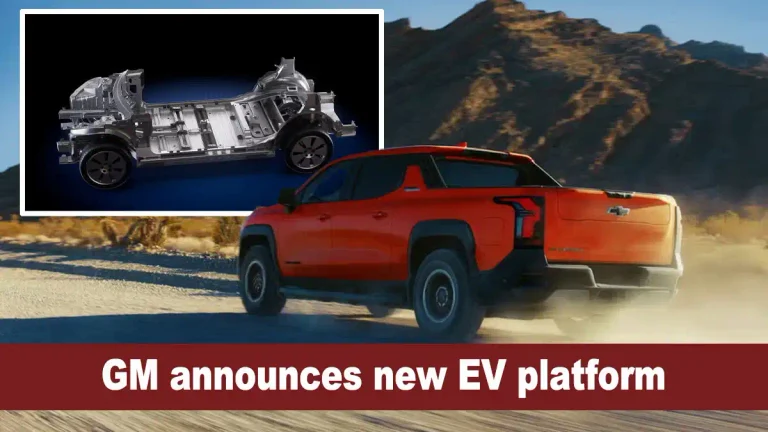
General Motors has announced its intention to go bullish on affordable electric vehicles. It is preparing a new generation of EVs that are affordable, offer more driving range and have lower development costs. At its GM Forward event in New York City on October 21, the automaker outlined a new-generation EV platform, new lithium manganese-rich batteries, redesigned electric motors and AI-assisted development processes. GM also wants to reduce vehicle development time from five years to just two.
Table of Contents
GM’s New EV Platform Will Target Mainstream Buyers
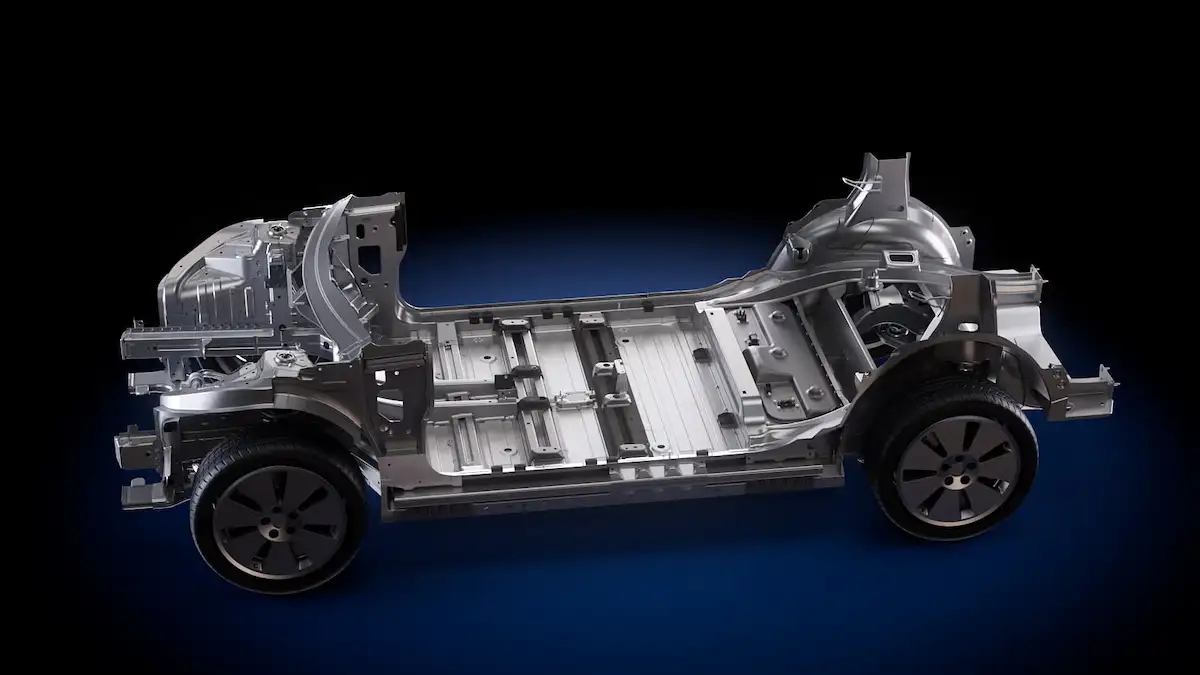
General Motors president Mark Reuss reaffirmed the company’s long-term commitment to electric vehicles, even as EV adoption in the US remains uneven. He said the company intends to develop EVs for mainstream buyers and will be ready when the American market begins adopting them in greater numbers.
GM’s fourth-generation EV platform will underpin a new range of vehicles across segments. It has not announced specific models, launch dates, prices or driving ranges, but executives indicated that small and mid-size crossovers will be among the key targets. These account for a substantial share of the US vehicle market.
The new platform will use a flexible skateboard architecture that can accommodate different battery chemistries. GM expects the combination of lower-cost batteries, lighter vehicles and more efficient electric motors to make future EVs more affordable without compromising range.
New Batteries: Lower Costs And Longer Range!
Lithium manganese-rich (LMR) batteries will be central to GM’s fourth-generation EV plans. Developed in partnership with LG Energy Solution, these are expected to enter volume production in 2028 at the Ultium Cells facility in Spring Hill, Tennessee.
GM says the new chemistry offers energy density close to its existing nickel-manganese-cobalt-aluminum (NMCA) batteries while approaching the cost of cheaper lithium-iron-phosphate (LFP) cells. According to the company, LMR cells are 33% more energy-dense than LFP batteries. This will allow automakers to deliver longer range with smaller and lighter battery packs at comparable costs.
ALSO READ: Next-Generation Ford Ranger Already In Development
The technology will initially be used in full-size electric trucks from Chevrolet and GMC. However, the company also expects LMR batteries to play a major role in its higher-volume EV models.
Zach Walker, GM’s director of global EV architecture, told Car and Driver that the chemistry is delivering more high-end capability than initially expected. This could eventually reduce the need for NMCA cells in some demanding applications, although GM has not made a final decision.
Computer modeling reportedly helped accelerate battery development. GM’s engineers evaluated more than 300,000 battery designs digitally before building a physical prototype. The first LMR battery-pack concept received formal program approval in just one month.
Lighter EVs And More Efficient Motors
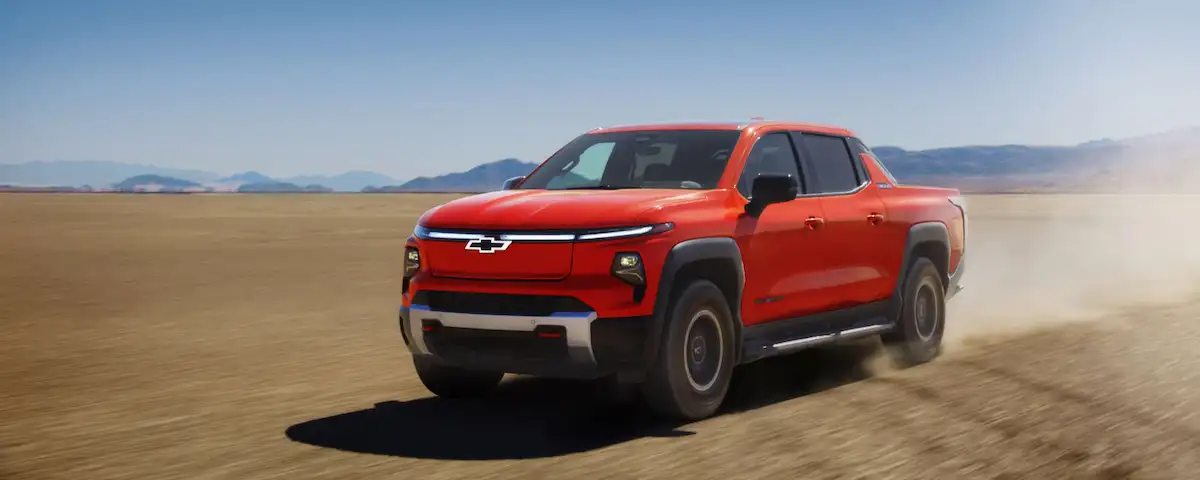
Battery chemistry is only one part of GM’s efficiency strategy. The automaker is also redesigning its electric drive units to reduce weight, complexity and manufacturing costs.
It says fourth-generation EVs will be approximately 15% lighter than comparable current models and have drag coefficients that are 25% lower. Their new electric drive units will contain 40% fewer motor parts. They will also be 20% more efficient than today’s units.
These improvements are expected to reduce the battery capacity required to deliver a given driving range by roughly 20%. In practical terms, GM could achieve comparable range with a smaller battery, helping lower vehicle costs and reduce weight.
The redesigned motors and power electronics will also free up packaging space for passengers and cargo. GM is targeting fewer control modules and 30% less wiring in future EVs, simplifying vehicle architecture and reducing manufacturing complexity.
ALSO READ: The Ford Fathom EV Will Be Built At Louisville!
The new platform will consolidate propulsion, perception, active safety and chassis controls into a high-speed Central Compute Unit. GM says this will offer 40% faster processing speeds, providing the computing capacity needed for increasingly software-driven vehicles.
AI Could Cut Vehicle Development To Two Years
GM wants to shorten its vehicle development cycle from the current five years to just two. Artificial intelligence, digital modelling and closer coordination between design, engineering and manufacturing will be central to that effort.
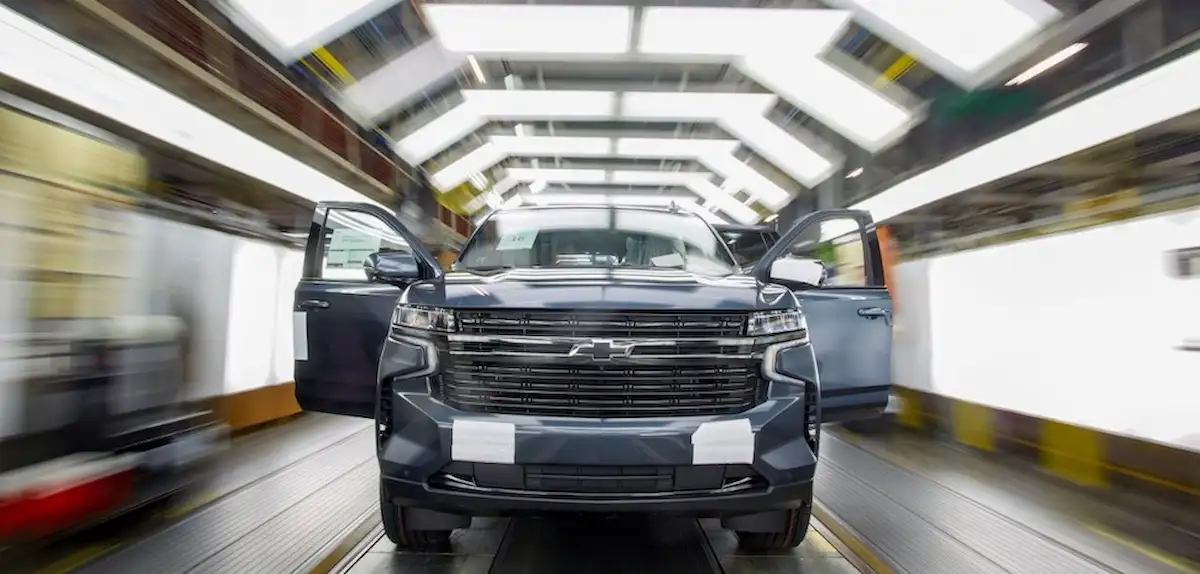
Instead of completing each stage of development in sequence, GM plans to connect teams through a unified digital process from the beginning. This concurrent approach is intended to help designers, engineers and manufacturing specialists work on related tasks at the same time, reducing delays and allowing problems to be identified earlier.
ALSO READ: 5 Pickup Trucks Shaking Up 2026: Ram Rumble Bee SRT To Slate EV
Sterling Anderson, GM’s chief product officer, described the approach as a shift away from a sequential development process toward one driven by large-scale data and concurrent engineering.
The company is also using digital tools to improve factory planning. Its PlantBrAIn manufacturing intelligence platform combines factory-floor data with computer models. This allows teams to test production processes, evaluate equipment placement and identify safety or ergonomic problems before installing new hardware.
GM says the approach is already producing results, with battery packs at its facilities moving through the production process 30% faster than before.
Add Vroom Head as a preferred source on Google News


